Hey, I want to share something that happened to me recently involving Alter or Altar.
I was chatting with a friend when this term suddenly popped up, and honestly, I had no idea what it really meant.
For a moment, I kept thinking, “Am I missing something here?” It was confusing, and I didn’t want to reply the wrong way or sound clueless.So, I decided to look into Alter or Altar to understand the correct meaning and proper usage.
Once I figured it out, everything made sense, and I realized how important it is to know the difference to avoid awkward moments in conversations.
Now, whenever I see Alter or Altar in chats or on social media, I feel confident responding the right way.
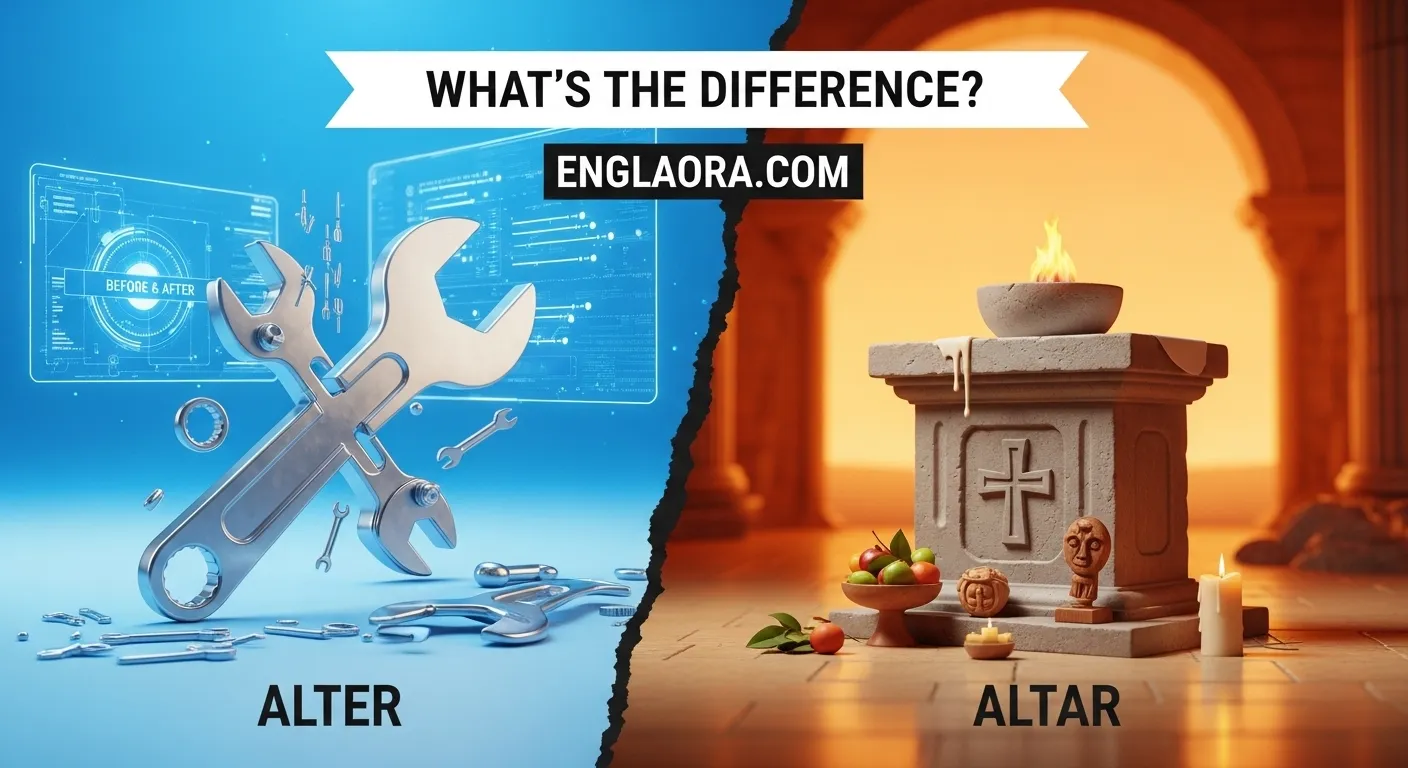
Alter or Altar – Quick Answer
- Alter: A verb meaning to change or modify.
- Example: “She decided to alter her dress before the party.”
- Altar: A noun referring to a table or platform used in religious ceremonies.
- Example: “The couple stood together at the altar.”
Quick tip: If it involves change, use alter. If it involves religion or rituals, use altar.
The Origin of Alter or Altar
- Alter comes from Latin alterare, meaning “to change.” It entered English in the late Middle Ages.
- Altar comes from Latin altare, meaning “high place” or “sacred platform.”
The similarity in pronunciation is why people often confuse them. Over centuries, spelling differences solidified based on context and usage.
British English vs American English Spelling
Both alter and altar are spelled the same in British and American English. However, the confusion arises due to pronunciation and homophones.
| Word | Meaning | Example (US) | Example (UK) |
| Alter | To change something | “He altered his plans.” | “She altered the dress.” |
| Altar | Sacred table/platform | “He knelt at the altar.” | “They placed flowers on the altar.” |
Key point: No spelling change between US and UK, but correct usage depends on meaning.
Which Spelling Should You Use?
- Use alter if writing about changes, adjustments, or modifications.
- Use altar if writing about religious or ceremonial contexts.
Audience-based tip:
- For global audiences, clarify meaning using context: “altar (religious)” or “alter (change)”.
- In professional writing, double-check the word’s meaning rather than relying on spelling alone.
Common Mistakes with Alter or Altar
- ❌ “He went to the alter to pray.” → Wrong, should be altar.
- ❌ “She needed to visit the altar to fix her schedule.” → Wrong, should be alter.
Correction tip: Replace the word with change or sacred table to test which is correct.
Alter or Altar in Everyday Examples
- Emails: “Please alter the document before sending it.”
- News headlines: “The king stood at the altar for the ceremony.”
- Social media: “Decided to alter my weekend plans!”
- Formal writing: “The statue was placed near the altar in the church.”
Alter or Altar – Google Trends & Usage Data
- Searches for alter vs altar spike around wedding seasons and fashion events.
- In the US, “altar” is often searched around religious holidays, while “alter” spikes in DIY, fashion, or home improvement contexts.
- Global trend: Confusion exists mostly in English-speaking countries with homophone awareness issues.
Comparison Table: Alter vs Altar
| Word | Part of Speech | Meaning | Usage Example |
| Alter | Verb | Change or modify | “She altered the meeting time.” |
| Altar | Noun | Religious platform | “The priest stood by the altar.” |
FAQs
- Can I use alter instead of altar?
No. Alter means change; altar refers to a religious platform. - Why do people confuse alter and altar?
Because they sound almost the same (homophones) but have different meanings. - Is altar used outside religious contexts?
Rarely, but sometimes metaphorically as a symbolic platform. - Is alter only a verb?
Yes, it primarily means to change or modify something. - Do Americans and Brits spell these words differently?
No. Both use the same spelling; meaning determines correct usage. - Can I remember them easily?
Yes! “Alter = change” and “Altar = sacred table.” - Which word is more commonly searched online?
It depends on context. Weddings and ceremonies drive “altar,” DIY and fashion drive “alter.”
Conclusion
Mixing up alter and altar is common, but with a simple mental check, you can avoid mistakes. Remember:
- Alter = change or modify.
- Altar = religious or ceremonial table/platform.
Check context first, especially in professional, academic, or social writing. Using the correct word shows attention to detail and strengthens your writing clarity. if you’re editing a document, posting on social media, or describing a wedding, this simple distinction will save you from embarrassing errors. Keep this guide handy, and you’ll never confuse these homophones again.
Discover More Articleˈs:
Yall vs Y’all: Clear Explanation with Examples(2026)
Savy vs Savvy: Simple Explanation with Examples(2026)
Tyres or Tires – Which Spelling Is Actually Correct?(2026)

Hi, I’m Ethan Hawkes, writing for Englaora.com. I provide clear, reliable content to help users understand the differences between commonly confused words.