Hey, I want to share something funny that happened to me recently about “Clutz or Klutz.”
I was chatting with a friend when this term suddenly popped up, and honestly, I had no idea what it meant at first.
I kept thinking, “Am I missing something here?” It was a little confusing, and I didn’t want to respond the wrong way.
So, I decided to look into “Clutz/Klutz” to understand its meaning and context.
After figuring it out, I realized how important it is to know these terms to avoid awkward moments in conversations.
By learning the proper meaning, I was able to respond confidently—and now I feel ready whenever I see “Clutz/Klutz” again in chats or on social media.
Clutz or Klutz – Quick Answer
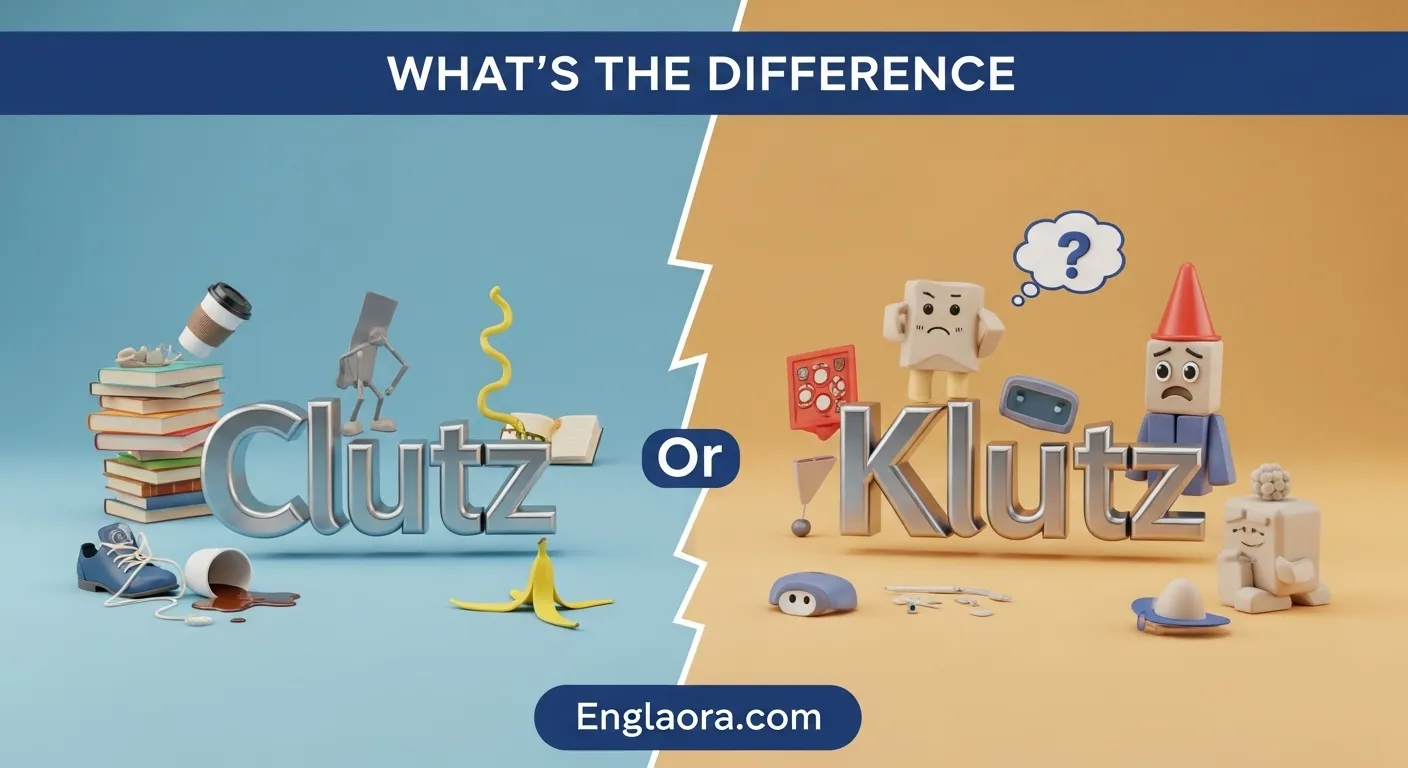
Quick answer: The correct spelling is “klutz”.
- Meaning: A clumsy or awkward person.
- Example: Don’t be such a klutz! You just dropped your coffee again.
- Incorrect: clutz – this is a common misspelling but widely recognized.
The Origin of Clutz/Klutz
The word klutz comes from the Yiddish word klots, which means “wooden block” or “clumsy person.” It entered English in the early 20th century, especially in American English.
The spelling clutz likely emerged because people tried to anglicize the word. Over time, dictionaries and style guides confirmed klutz as the standard spelling.
British English vs American English Spelling
- American English: klutz (official, standard)
- British English: klutz (used as in the US; clutz is also seen but informal)
| Variant | Region | Status | Example Sentence |
| klutz | US, UK, Canada | Correct | He’s a total klutz when it comes to sports. |
| clutz | Informal, worldwide | Incorrect | She’s such a clutz at the office party. |
Note: Both regions may recognize clutz in casual writing, but it’s better to stick with klutz.
Which Spelling Should You Use?
- US audience: Always use klutz.
- UK & Commonwealth: Use klutz, but clutz is occasionally accepted informally.
- Global audience: Stick to klutz to avoid confusion.
Common Mistakes with Clutz/Klutz
- Writing clutz in professional emails. ✅ Correction: klutz
- Assuming klutz is a verb (“I klutzed my way out”) – it’s a noun. ✅ Correction: I acted like a klutz.
- Overcapitalizing unnecessarily: Klutz in the middle of a sentence should not be capitalized.
Clutz/Klutz in Everyday Examples
- Emails: I’m such a klutz—I spilled coffee on the report!
- News: The politician was called a klutz after tripping on stage.
- Social media: Tag a klutz friend who always drops their phone.
- Formal writing: The study showed that klutz tendencies are often linked to coordination challenges.
Clutz/Klutz – Google Trends & Usage Data
Google Trends shows klutz is searched more frequently than clutz, especially in the US and Canada. Searches spike in articles about clumsiness, sports bloopers, and lifestyle humor.
| Keyword | Popularity | Notes |
| klutz | High | Preferred spelling worldwide |
| clutz | Low | Often considered informal/misspelling |
FAQs
1. Is it klutz or clutz?
- Correct: klutz. Clutz is informal or misspelled.
2. What does klutz mean?
- A clumsy, awkward person.
3. Can clutz ever be correct?
- Only in informal writing; standard dictionaries prefer klutz.
4. Is klutz American or British?
- Originates from American English but is widely understood in British English.
5. Can I use klutz in professional writing?
- Yes, if describing someone clumsy, but avoid using clutz.
6. Can klutz be plural?
- Yes, klutzes. Example: The klutzes in the room kept tripping over wires.
7. Does klutz have a verb form?
- No, it is only a noun.
Conclusion
Understanding whether to use clutz or klutz is simpler than it seems. Stick with klutz for correct spelling, especially in professional or academic writing. Use clutz only informally if needed, knowing it’s less recognized. The word comes from Yiddish, has a rich history, and is used worldwide to describe someone clumsy.
By following these tips, you can confidently use klutz in emails, social media, or formal writing. Remember, clarity and correct spelling matter more than casual approximations. Choosing the right form ensures your writing looks polished, professional, and credible.

Hi, I’m Emma Caldwell, an expert author at Englaora.com. I share clear insights on language differences and provide readers with reliable, easy-to-understand content.