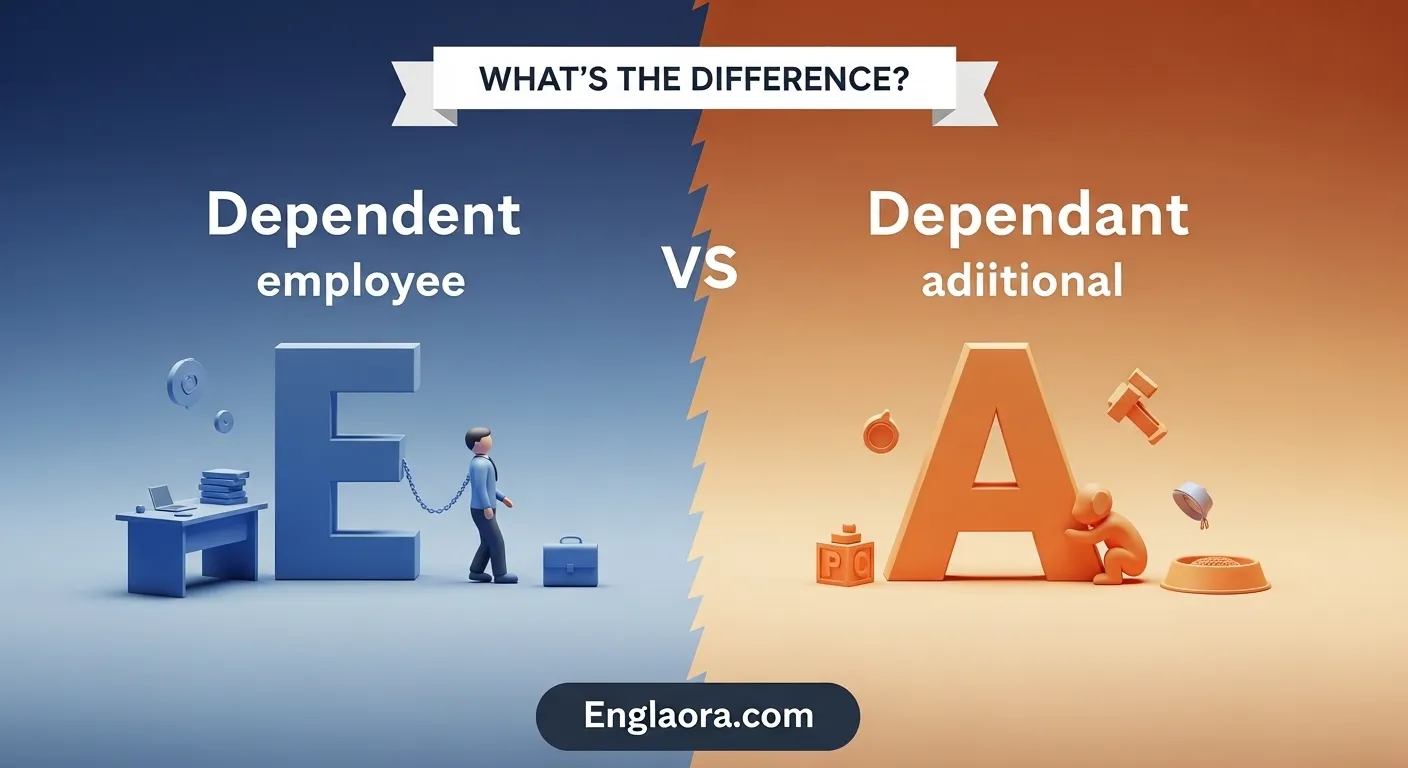
Hey, I want to share something that happened to me recently involving Dependent or Dependant.
I was chatting with a friend when this term suddenly popped up, and honestly, I had no idea what it really meant.
For a moment, I kept thinking, “Am I missing something here?” It was confusing, and I didn’t want to reply the wrong way or sound clueless.
So, I decided to look into Dependent or Dependant to understand the correct meaning and proper usage.
Once I figured it out, everything made sense, and I realized how important it is to know the difference to avoid awkward moments in conversations.
Now, whenever I see Dependent or Dependant in chats or on social media, I feel confident responding the right way.
Dependent or Dependant – Quick Answer
- Dependent (with -ent) is the most commonly used spelling in American English and is widely accepted in formal writing globally.
- Example: She is dependent on her parents for financial support.
- Dependant (with -ant) is primarily British English and is usually a noun referring to someone who relies on another person.
- Example: His children are his dependants.
Quick rule: Use dependent as an adjective (describing someone relying on something). Use dependant as a noun in UK English.
The Origin of Dependent/Dependant
The words dependent and dependant come from the Latin verb dependere, meaning “to hang from” or “to rely on.” Over time, English adopted both spellings, but usage diverged between regions.
- Dependent first appeared in English around the 14th century.
- Dependant emerged later, particularly in British English, to distinguish the noun from the adjective.
The divergence is mainly regional preference, not grammatical correctness.
British English vs American English Spelling
| Feature | Dependent | Dependant |
| Type | Adjective & sometimes noun | Noun (UK only) |
| Region | US, Canada, Global | UK, Commonwealth |
| Example (Adj) | She is dependent on her salary. | ✗ Not standard |
| Example (Noun) | ✗ Rarely used as noun in US | His dependants include two children. |
Summary: Americans generally always use dependent, while British writers distinguish based on adjective vs noun usage.
Which Spelling Should You Use?
- United States: Always use dependent for both adjective and noun.
- United Kingdom & Commonwealth countries:
- Use dependent as an adjective: He is dependent on his mentor.
- Use dependant as a noun: The student has three dependants.
- Global audiences or international writing: Dependent is safer and widely understood.
Common Mistakes with Dependent/Dependant
- Using dependant as an adjective in the US → Incorrect.
- ❌ She is dependant on her parents.
- ✅ She is dependent on her parents.
- Using dependent as a noun in the UK (formal writing) → Acceptable but less common.
- Confusing with independent → Check if the meaning is reliance vs autonomy.
Dependent/Dependant in Everyday Examples
- Emails: Please list any dependents on your health insurance form.
- News articles: The number of dependants per household has increased.
- Social media: Feeling dependent on coffee today!
- Formal writing: All dependants must submit proof of relationship.
Dependent/Dependant – Google Trends & Usage Data
According to Google Trends:
- Dependent dominates in searches worldwide.
- Dependant shows spikes mainly in the UK, Australia, and New Zealand.
- Searches often peak during academic and tax seasons when people check spelling for forms and official documents.
Comparison Table: Dependent vs Dependant
| Spelling | Part of Speech | Region | Usage Example |
| Dependent | Adjective (US & UK), Noun (US rare) | US, UK, Global | She is dependent on her mentor. |
| Dependant | Noun | UK, Commonwealth | His dependants include two children. |
FAQs
1. Can I use dependent and dependant interchangeably?
- Only in UK English as a noun vs adjective distinction. In the US, use dependent for all cases.
2. Is dependant wrong in American English?
- Yes, American English generally avoids “dependant” as a noun.
3. Which is more common worldwide?
- Dependent is much more widely used and recognized globally.
4. How do I remember the difference?
- Dependent → adjective, universal.
- Dependant → noun, mainly UK.
5. Can “dependent” be used as a noun in the UK?
- Yes, but “dependant” is preferred in formal contexts.
6. Is there a difference in pronunciation?
- No significant difference; context and spelling indicate meaning.
7. Does this affect legal or official documents?
- Yes, always follow local style guides: US → dependent, UK → dependant (noun).
Conclusion
Understanding dependent vs dependant is simple once you know the rules: dependent is safe everywhere as an adjective and widely used as a noun in American English. Dependant is mainly a British noun. Knowing your audience—US, UK, or global—ensures your writing is correct and professional. This distinction not only improves clarity but also prevents embarrassing errors in formal documents, academic papers, emails, and social media posts. Use the tables, examples, and rules in this guide to confidently write dependent or dependant without hesitation. Remember, for most global readers, dependent will always be understood and acceptable.

Hi, I’m Emma Caldwell, an expert author at Englaora.com. I share clear insights on language differences and provide readers with reliable, easy-to-understand content.