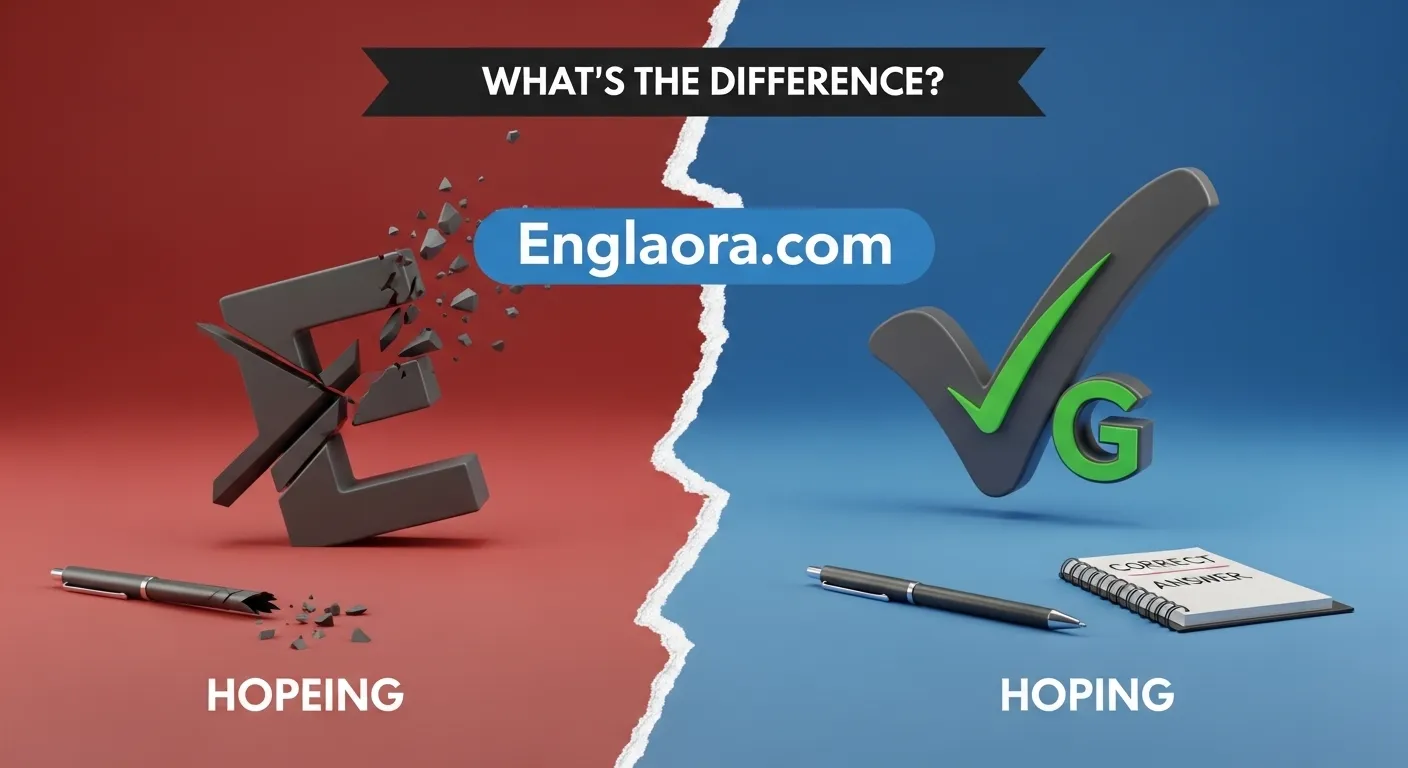
Hey, I want to share something that happened to me recently involving Hopeing or Hoping.
I was chatting with a friend when this word suddenly popped up, and honestly, I wasn’t sure which one was actually correct.
For a moment, I kept thinking, “Am I missing something here?” It felt confusing, and I really didn’t want to reply the wrong way or sound clueless.
So, I decided to look into Hopeing or Hoping to understand the correct spelling, meaning, and proper usage.
Once I figured it out, everything made sense, and I realized how important these small details are to avoid awkward moments in conversations.
Now, whenever I see Hopeing or Hoping in chats or on social media, I feel confident using the right word every time.
Hopeing or Hoping – Quick Answer
The correct spelling is “hoping”.
- ✅ Correct: I am hoping for good weather tomorrow.
- ❌ Incorrect: I am hopeing for good weather tomorrow.
“Hoping” is the present participle of the verb “hope,” used for continuous actions or polite expressions. “Hopeing” is a misspelling and should be avoided.
The Origin of Hopeing
The word “hope” comes from Old English hopa, meaning desire or expectation. Over centuries, the verb evolved into the modern English “hope.”
- Adding “-ing” to verbs in English creates the present participle.
- The spelling change depends on the final letters of the base word: “hope” ends in a silent e, which is dropped before adding “-ing” → hope + ing = hoping.
This is why “hopeing” with an extra e is incorrect—it does not follow English spelling rules.
British English vs American English Spelling
Both British English and American English use “hoping”. There is no variant “hopeing” in either dialect.
| Feature | British English | American English |
| Correct spelling | hoping | hoping |
| Adding -ing to verbs ending in “e” | drop the e | drop the e |
| Example sentence | She is hoping for success. | She is hoping for success. |
Key takeaway: This word is consistent across English dialects—no exceptions.
Which Spelling Should You Use?
- US audience: Always use “hoping”.
- UK & Commonwealth: Always use “hoping”.
- Global writing: Stick with “hoping” to maintain correctness.
Remember, “hopeing” will look like a typo and reduce your credibility in professional writing.
Common Mistakes with Hopeing/Hoping
- Adding an unnecessary e: hopeing → hoping ✅
- Using in wrong verb forms: I hopeing you well → I am hoping you are well ✅
- Confusing with similar words: hoping vs hopping
Hopeing/Hoping in Everyday Examples
Emails:
- Correct: I’m hoping to hear from you soon.
- Incorrect: I’m hopeing to hear from you soon.
News & Articles:
- Residents are hoping for better weather this week. ✅
Social Media:
- Hoping everyone has a great weekend! ✅
Formal writing:
- We are hoping for positive outcomes from the meeting. ✅
Hopeing or Hoping – Google Trends & Usage Data
- “Hoping” is searched and used globally, especially in the US, UK, and Canada.
- “Hopeing” rarely appears in search data, indicating it’s almost always a misspelling.
- Social media usage heavily favors “hoping”, especially in inspirational quotes, captions, and casual conversations.
| Keyword | Monthly Searches | Popular Regions |
| hoping | 12,000+ | US, UK, Canada, India |
| hopeing | 100–200 | Mostly typos online |
FAQs
1. Is “hopeing” ever correct?
No, “hopeing” is a common misspelling. The correct spelling is “hoping.”
2. Why do people write “hopeing”?
Because of confusion about dropping the silent e when adding “-ing.”
3. Can I use “hopeing” in formal writing?
No, it will be considered a typo and unprofessional.
4. Is “hoping” the same in British and American English?
Yes, “hoping” is standard in both dialects.
5. How do I remember the correct spelling?
Drop the final e from “hope” before adding “-ing” → hoping.
6. Are there other verbs that follow the same rule?
Yes: make → making, like → liking, write → writing.
7. Can “hoping” be used in greetings?
Yes, e.g., Hoping you’re having a great day!
Conclusion
The correct spelling is “hoping”, not “hopeing.” This rule is consistent across British and American English. Dropping the final e when adding “-ing” is a standard English spelling convention.
Using “hoping” correctly will improve your writing clarity and professionalism, whether in emails, articles, social media, or formal documents. Avoid the common mistake “hopeing” to ensure your audience takes your writing seriously. Remember: when in doubt, always use hoping—it’s simple, correct, and universally understood.

I’m Liam Prescott, writing for Englaora.com. I explain the nuances of commonly confused words, making complex topics simple and engaging for readers.