Hey, I want to share something that happened to me recently involving Let’s or Lets.
I was chatting with a friend when this term suddenly popped up, and honestly, I had no idea what it really meant.
For a moment, I kept thinking, “Am I missing something here?” It was confusing, and I didn’t want to reply the wrong way or sound clueless.
Once I figured it out, everything started to make sense, and I realized how important it is to know the difference to avoid awkward moments in conversations.
Now, whenever I see Let’s or Lets in chats or on social media, I feel confident using the right one without any confusion.
Quick Answer
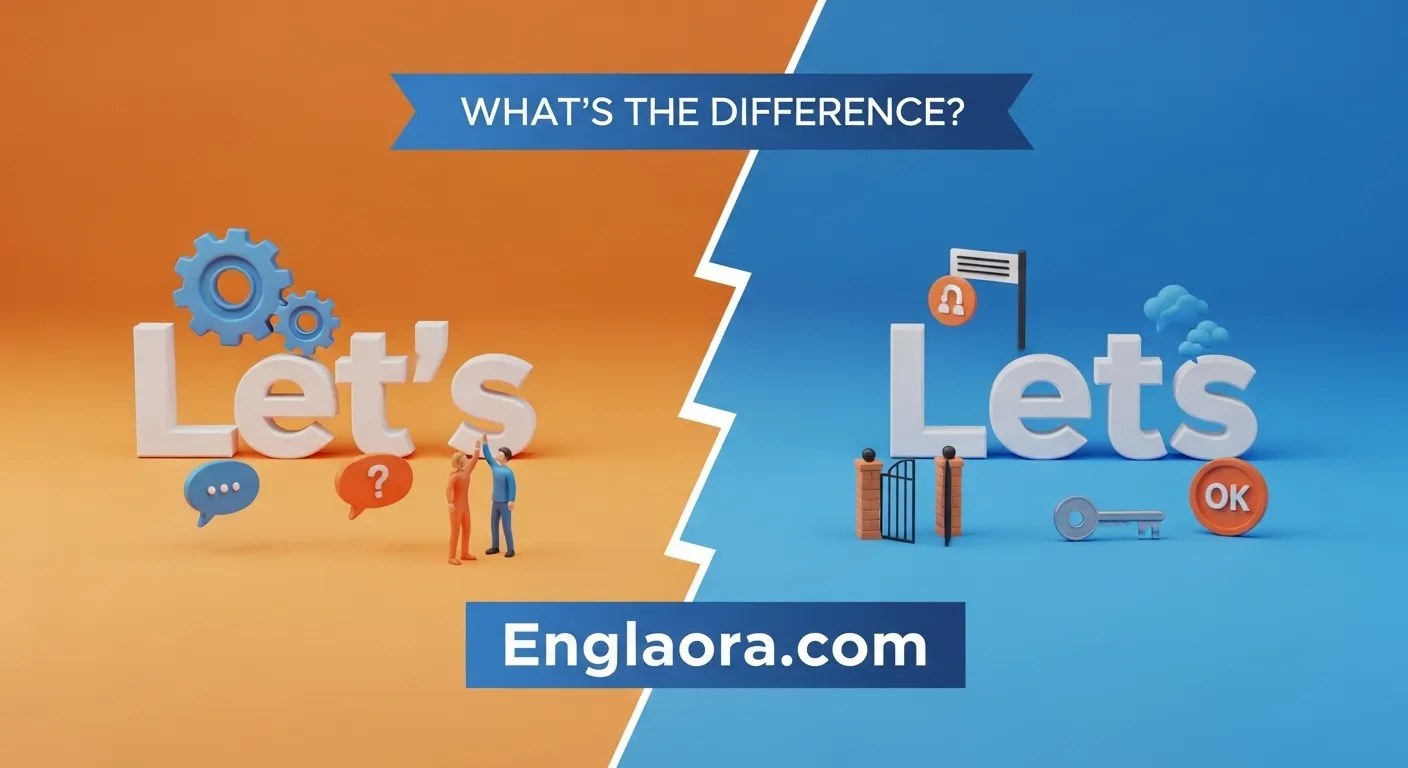
Let’s is short for “let us.”
Lets is a verb meaning allows or permits.
Examples:
- Let’s go to the park. (Let us go)
- She lets her kids stay up late. (Allows)
Rule to remember:
If you can replace the word with let us, use let’s. If not, use lets.
The Origin of Let’s or Lets
The word let comes from Old English lǣtan, meaning to allow or permit. Over time, English developed contractions to make speech faster and more natural. Let’s appeared as a shortened form of let us.
The apostrophe in let’s shows missing letters (the u in us). Lets, without an apostrophe, stayed as the standard verb form. The spelling difference exists because English separates contractions from main verb forms using apostrophes.
British English vs American English Spelling
There is no spelling difference between British and American English for this word pair. Both follow the same rule.
| Form | Meaning | British English | American English |
| let’s | let us | ✅ Correct | ✅ Correct |
| lets | allows/permits | ✅ Correct | ✅ Correct |
The confusion is not regional. It is grammatical.
Which Spelling Should You Use?
- Use let’s when inviting, suggesting, or proposing action.
Let’s start the meeting. - Use lets when talking about permission or allowance.
The teacher lets students ask questions.
Audience advice:
- US & UK writers: Follow the same rule.
- Global audiences: Use let’s in friendly or conversational tone. Use lets in formal explanation or reporting.
- Professional writing: Double-check apostrophes before publishing.
Common Mistakes
- ❌ Lets go home.
✅ Let’s go home. - ❌ My boss let’s me work remote.
✅ My boss lets me work remote. - ❌ Using let’s for possession (it never shows ownership).
- ❌ Skipping the apostrophe in invitations or commands.
Everyday Examples
Emails:
- Let’s schedule a call tomorrow.
- She lets clients reschedule once.
News:
- The policy lets workers take leave.
- Let’s look at the facts.
Social Media:
- Let’s make today productive!
- He lets negativity win.
Formal Writing:
- The rule lets users reset passwords.
- Let’s consider the long-term impact.
Google Trends & Usage Data
Search interest for let’s or lets stays steady all year. It rises during exam seasons, content writing growth, and ESL learning trends.
- Let’s appears more in informal searches and social content.
- Lets appears more in grammar checks and formal writing queries.
English learners and content creators are the most common searchers worldwide.
Comparison Table
| Feature | Let’s | Lets |
| Type | Contraction | Verb |
| Meaning | Let us | Allows |
| Apostrophe | Yes | No |
| Common Use | Suggestions | Permissions |
| Replace Test | “Let us” | “Allows” |
FAQs
1. Is “let’s” always informal?
No. It is fine in both casual and professional writing.
2. Can “lets” ever have an apostrophe?
No. Apostrophes are not used for verbs.
3. Is “let’s” a command?
It is usually a suggestion or invitation.
4. Why do people confuse them?
They sound identical when spoken.
5. Is “lets” plural?
No. It is a third-person singular verb.
6. Can I start a sentence with “let’s”?
Yes, it is grammatically correct.
Conclusion
The difference between let’s and lets is small but important. One tiny apostrophe changes the meaning of your sentence. Let’s means let us and is used for suggestions, plans, and shared actions. Lets means allows and is used when someone gives permission.
This confusion is common because both forms sound the same, but English spelling relies on grammar, not sound. There is no difference between British and American English here, so the same rule applies everywhere.
Before you write, pause and test the sentence. If let us fits, choose let’s. If allows fits, choose lets. This simple habit will instantly improve your writing clarity and professionalism.
Mastering small grammar details like this builds confidence and trust in your communication. Now you know the rule—use it with confidence.

Hi, I’m Emma Caldwell, an expert author at Englaora.com. I share clear insights on language differences and provide readers with reliable, easy-to-understand content.