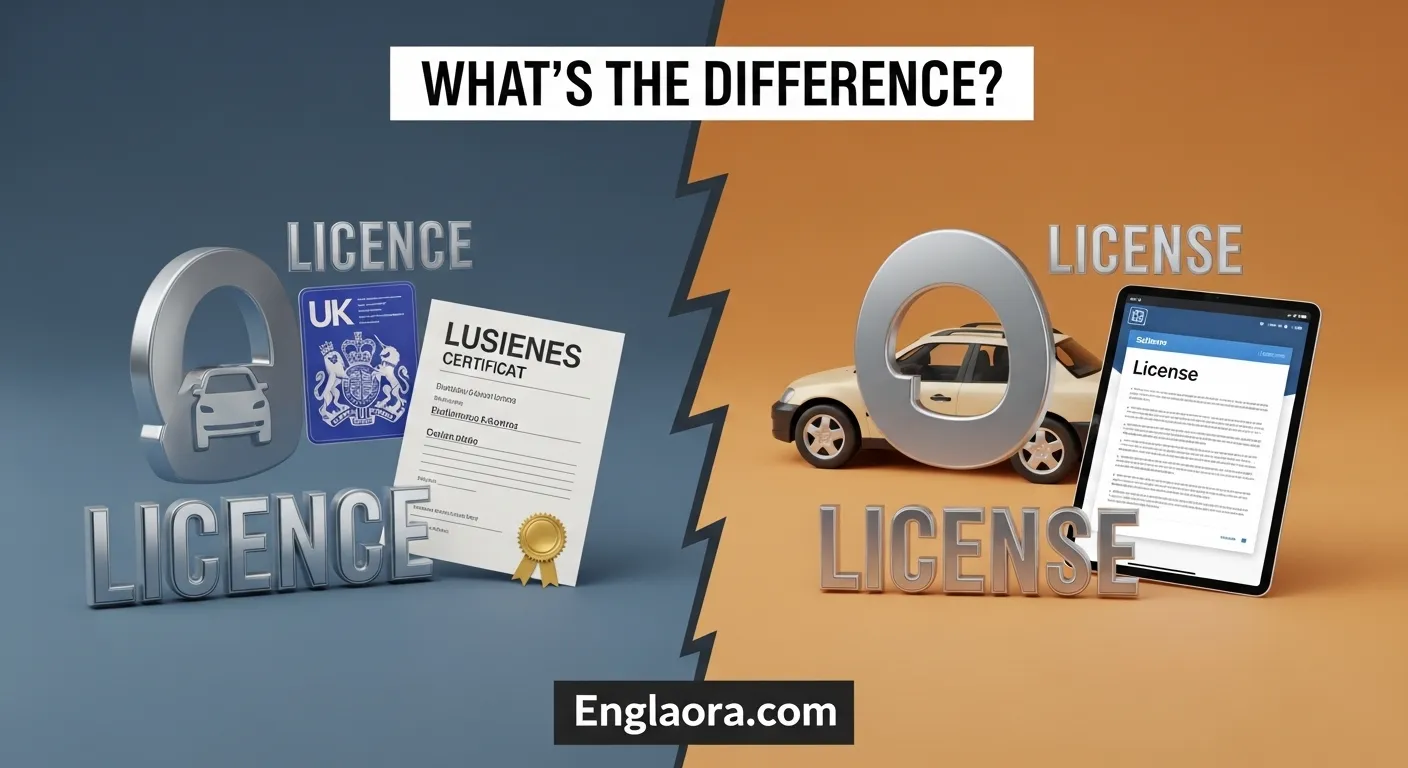
Hey, I want to share something that happened to me recently involving Licence or License.
I was chatting with a friend when this word suddenly appeared in our conversation, and honestly, I wasn’t sure which spelling was correct.
For a moment, I kept thinking, “Am I missing something here?” It felt confusing, and I didn’t want to reply the wrong way or sound like I didn’t understand basic English.
So, I decided to look into Licence or License to understand the correct spelling and when each one should be used.
Once I figured it out, everything became clear, and I realized how important it is to know these small differences to avoid awkward mistakes in conversations and writing.
Now, whenever I see Licence or License in chats, emails, or on social media, I feel confident using the right one without any hesitation.
Licence or License Meaning
The word refers to official permission to do something, such as driving, teaching, or selling goods.
- Licence (noun): Permission granted by an authority (British English).
- License (verb): To grant permission (used in both British and American English).
Example:
- UK: “You need a driving licence to drive legally.”
- US: “The city licenses food vendors each year.”
Oxford English Dictionary
According to the Oxford English Dictionary (OED):
- Licence: Noun; formal permission or permit.
- License: Verb; the act of granting permission.
This explains why British English differentiates the noun and verb, while American English often uses license for both.
Difference in UK
In the UK:
- Licence = noun
- License = verb
Examples:
- Noun: “He has a fishing licence.”
- Verb: “The council licenses taxi drivers.”
Licence or License Which Is Correct
- US English: License (noun & verb)
- UK English: Licence (noun), License (verb)
- Canada & Australia: Usually follow British rules
Quick Tip: If writing for an American audience, always use license. For a UK or Commonwealth audience, use licence for nouns and license for verbs.
Licence and License Australia
Australia generally follows British English rules:
- Noun → licence
- Verb → license
Example: “Drivers must renew their licence every five years.”
Difference in British English
British English strictly separates noun and verb forms:
- Noun → licence
- Verb → license
Example:
- Noun: “He showed his licence to the officer.”
- Verb: “The government licenses new businesses.”
Difference in Canada
Canada follows British conventions in formal writing:
- Noun → licence
- Verb → license
Example: “Canadian citizens require a fishing licence before going fishing.”
Difference Table
| Form | Function | Region | Example |
| Licence | Noun | UK, Canada, Australia | “I have a driving licence.” |
| License | Verb | UK, US, Canada, Australia | “They license software annually.” |
| License | Noun & Verb | US | “You need a license to drive.” |
Licence or License NZ
New Zealand follows British rules:
- Noun → licence
- Verb → license
Example: “All drivers must carry their licence.”
Licence or License Example
Emails: “Please attach a copy of your business licence.”
News: “The government licenses new alcohol stores.”
Social Media: “Got my new driver’s licence today!”
Formal Writing: “The company must license its technology before distribution.”
Licence or License Number
The licence number is a unique identifier for a permit.
Example: “Your driving licence number is printed on the card.”
Licence or License Plural
- UK Noun: licences
- US Noun: licenses
Example: “All permits and licences must be updated.”
Licence or License Agreement
A licence agreement is a legal contract giving permission to use something.
Example: “The software licence agreement outlines usage terms.”
Quick Answer
- UK: Noun → licence | Verb → license
- US: Both noun & verb → license
Example: “He has a driving licence.” / “The council licenses taxis.”
The Origin of Licence or License
The word comes from Latin “licentia”, meaning “freedom” or “permission.” Early English adopted both forms, but over time, British English separated noun and verb, while American English simplified to license for both.
British English vs American English Spelling
| Feature | British | American | Example |
| Noun | licence | license | “Driving licence” / “Driver’s license” |
| Verb | license | license | “The city licenses taxis” |
Tip: US prefers simplicity; UK keeps noun/verb distinction.
Which Spelling Should You Use?
- US audience → license (all cases)
- UK/Commonwealth → licence (noun), license (verb)
- Global content → consider your audience; if unsure, US English is widely understood.
Common Mistakes
- Using license for noun in UK: ❌ “I need my license.” ✅ “I need my licence.”
- Using licence for verb in US: ❌ “They licence the store.” ✅ “They license the store.”
Everyday Examples
- Email: “Please attach your business licence.”
- Social media: “Got my new driver’s licence today!”
- News: “Government licenses new pharmacies.”
- Official form: “Enter your licence number below.”
Google Trends & Usage Data
- US: Searches mostly for license (noun & verb)
- UK, Australia, Canada: “licence” (noun) + “license” (verb)
- Popular searches: driving licence, software license, fishing licence
FAQs
1. Can I use license in UK?
Yes, only for verbs. Nouns must be licence.
2. Is licence American spelling?
No, licence (noun) is UK; license is American.
3. How to remember?
Noun ends with “-ce”, verb ends with “-se” in UK English.
4. Is license plural licenses?
Yes in US. UK noun plural: licences.
5. Can I say driving license in UK?
Technically, it’s incorrect; correct noun: driving licence.
6. What is a licence agreement?
It’s a legal document giving permission to use something under specified terms.
Conclusion
Choosing between licence and license is simple once you know your audience. For American readers, license works as both noun and verb. For British and Commonwealth countries, remember: licence = noun, license = verb. Correct usage improves writing clarity and prevents mistakes in emails, legal documents, and online content. Always check your audience and the type of English you are writing in. Now, whenever you see this word, you’ll confidently select the right form for your context.

Hi, I’m Toby Kellan, writing for Englaora.com. I provide clear, reliable content to help users understand the differences between commonly confused words.