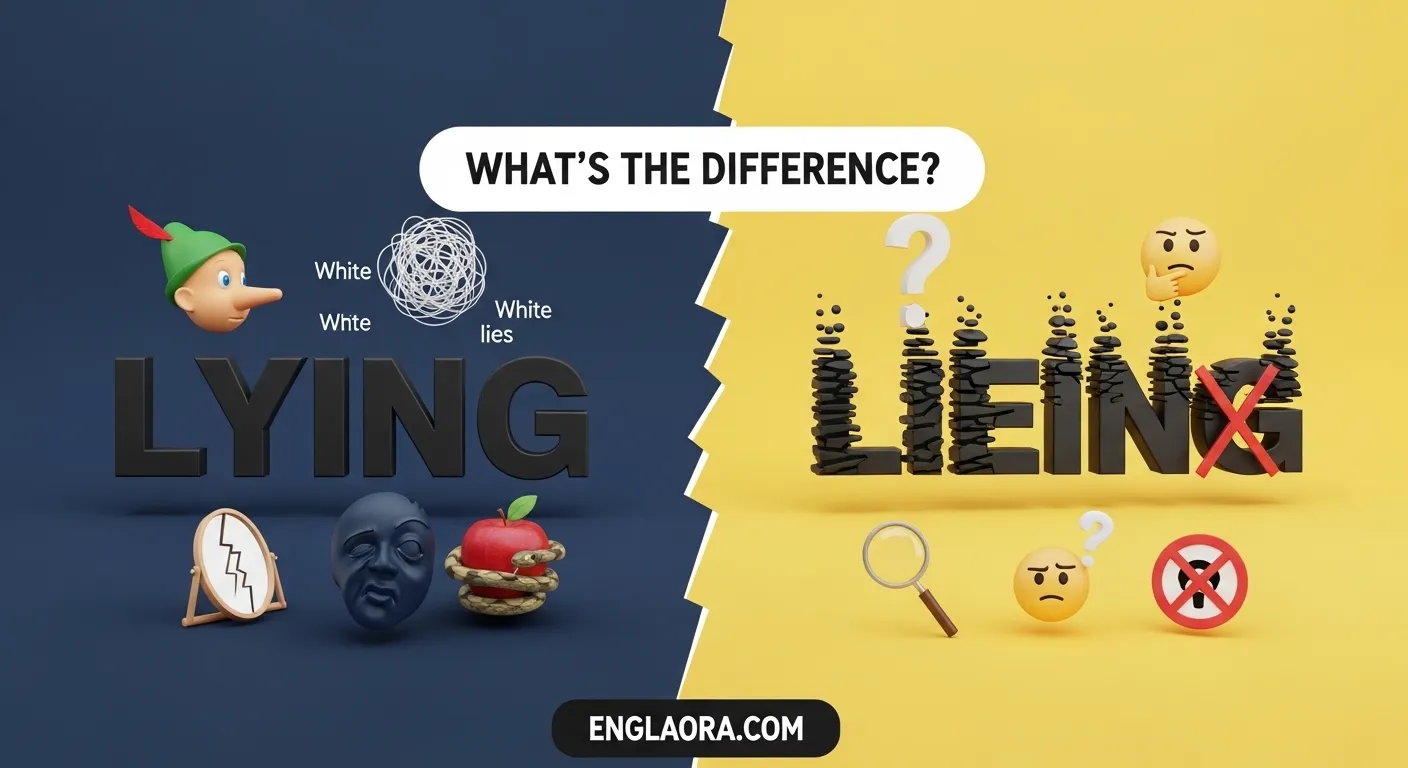
Hey, I want to share something that happened to me recently involving Lying or Lieing.
I was chatting with a friend when this word suddenly popped up, and honestly, I froze for a second. I wasn’t sure which
One was correct, and I kept thinking, “Am I missing something here?” It was confusing, and I really didn’t want to reply the wrong way or sound clueless.So, I decided to look into Lying or Lieing to understand the correct meaning and proper usage.
Once I figured it out, everything finally made sense—and I realized how important it is to know these small differences to avoid awkward moments in conversations.
Now, whenever I see Lying or Lieing in chats or on social media, I feel confident using the right one every time.
Lying or Lieing – Quick Answer
Lying is the correct spelling.
Lieing is incorrect and not accepted in standard English.
Examples:
- She was lying on the couch all afternoon.
- He was lying about the reason he was late.
❌ She was lieing on the couch. (Incorrect)
❌ He is lieing to his boss. (Incorrect)
The Origin of “Lying or Lieing”
The confusion comes from how English handles verbs that end in -ie. The base verb lie has two meanings:
- To recline (lie down)
- To tell something untrue
When forming the -ing version, English follows a special rule:
👉 Drop “ie” and replace it with “y” before adding “-ing.”
So:
- die → dying
- tie → tying
- lie → lying
That’s why lieing never existed as a correct form. The spelling changed over time to make pronunciation smoother and clearer in written English.
British English vs American English Spelling
Good news: there is no difference here between British and American English.
Both varieties use lying only.
| Form | British English | American English | Correct |
| lying | ✅ | ✅ | Yes |
| lieing | ❌ | ❌ | No |
Unlike words such as colour/color or organise/organize, this spelling rule is universal.
Which Spelling Should You Use?
The answer depends on clarity, not location.
- US audience: Use lying
- UK audience: Use lying
- International or global audience: Use lying
There is no situation where lieing is acceptable. If you want to sound fluent, professional, and confident, lying is the only choice.
Common Mistakes with “Lying or Lieing”
Here are the most frequent errors people make:
- ❌ Adding -ing without changing ie → lieing
- ❌ Assuming British English allows a different spelling
- ❌ Mixing it up with laying (a different verb entirely)
Correction tip:
If the base word ends in ie, always switch it to y before adding -ing.
“Lying” in Everyday Examples
Emails:
- I believe the information shared earlier was misleading, and someone may have been lying.
News:
- The investigation revealed that the witness had been lying under oath.
Social Media:
- Stop lying for attention. The truth always comes out.
Formal Writing:
- Deliberately lying in legal documents carries serious consequences.
Lying or Lieing – Google Trends & Usage Data
Search data shows that “lying or lieing” is commonly searched in:
- The United States
- United Kingdom
- Canada
- Australia
- India
Most searches come from students, ESL learners, content writers, and professionals. Interestingly, lieing appears frequently in informal writing and early drafts but is corrected in published content. This shows the confusion exists—but the correct usage is consistent worldwide.
Comparison Table: Lying vs Lieing
| Word | Status | Meaning | Example |
| lying | Correct | Reclining or telling an untruth | He is lying on the floor. |
| lieing | Incorrect | None | ❌ Not a real word |
FAQs
1. Is “lieing” ever correct?
No. It is always incorrect.
2. Why does “lie” become “lying”?
Because English changes ie to y before adding -ing.
3. Is “lying” the same in UK and US English?
Yes, the spelling is identical.
4. Does “lying” mean only telling a lie?
No. It can also mean reclining or resting.
5. Is “lying” related to “laying”?
No. Lying doesn’t take an object; laying does.
6. Do grammar checkers catch “lieing”?
Most modern tools flag it as an error.
Conclusion
The confusion between lying or lieing is understandable, but the rule is simple once you know it. Lying is the only correct spelling in all forms of English. The mistake happens because English drops ie and replaces it with y before adding -ing—a rule that also applies to dying and tying.
If you’re writing an email, essay, social media post, or professional document, using lying ensures clarity and correctness. There’s no regional exception, no alternative spelling, and no special case. If you remember one thing, remember this: lie → lying, never lieing.
Mastering small details like this improves your writing and builds confidence. Once you understand the pattern, you’ll never hesitate over this word again.

I’m Liam Prescott, writing for Englaora.com. I explain the nuances of commonly confused words, making complex topics simple and engaging for readers.