Hey, I want to share something that happened to me recently involving Sew or Sow.
I was chatting with a friend when this term suddenly popped up, and honestly, I had no idea what it really meant.
For a moment, I kept thinking, “Am I missing something here?” — it was confusing, and I didn’t want to reply the wrong way or sound clueless.
So, I decided to look into Sew or Sow to understand the correct meaning and proper usage.
Once I figured it out, everything made sense, and I realized how important it is to know the difference to avoid awkward moments in conversations.
Now, whenever I see Sew or Sow in chats or on social media, I feel confident responding the right way.
Sew or Sow – Quick Answer
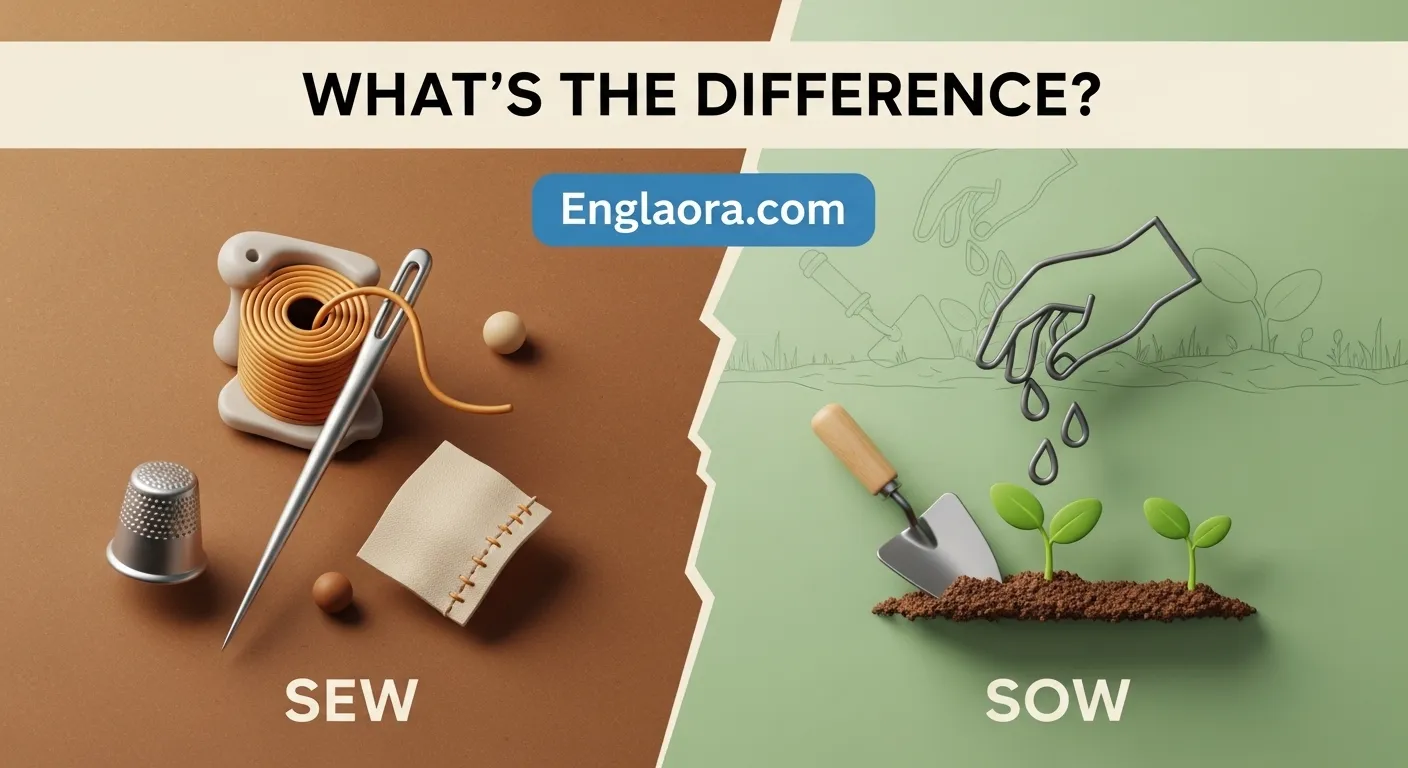
- Sew → To stitch or join fabric using needle and thread.
Example: She learned to sew her own clothes. - Sow → To plant seeds in the ground.
Example: The gardener will sow tomatoes in the spring.
Tip: Remember: “Sew” has an “e” like needle, and “Sow” has an “o” like grow.
The Origin of Sew or Sow
The words sew and sow come from different Old English roots:
- Sew – from Old English siwan, meaning “to stitch.” This word has been used in English since the 12th century.
- Sow – from Old English sawan, meaning “to plant seed.” This word is also very old, dating back to the early Middle Ages.
Although they sound the same (homophones), their spelling differences help readers distinguish between sewing and planting. English has many such homophones, which can confuse learners and native speakers alike.
British English vs American English Spelling
Both sew and sow are spelled the same in British and American English. There is no variation in spelling between the two countries, but some other homophones might differ.
| Word | British English | American English | Meaning |
| Sew | Sew | Sew | Stitch fabric |
| Sow | Sow | Sow | Plant seeds |
So the spelling stays consistent; the confusion is purely about meaning.
Which Spelling Should You Use?
- If you mean stitching fabric, always use sew.
- If you mean planting seeds, always use sow.
Audience tip: No matter if your reader is in the US, UK, or elsewhere, the spelling doesn’t change. Focus on context instead.
Common Mistakes with Sew or Sow
- Incorrect: I need to sow a button on my shirt.
Correct: I need to sew a button on my shirt. - Incorrect: She will sew carrots in the garden.
Correct: She will sow carrots in the garden. - Confusing sew with so in informal writing.
Always check context and meaning.
Sew or Sow in Everyday Examples
Emails:
- “I can sew the torn hem before the meeting.”
Social media:
- “Time to sow some sunflower seeds 🌻 #gardening”
News articles:
- “Farmers sow wheat in the northern regions this week.”
Formal writing:
- “The tailor will sew a new suit for the ambassador.”
Sew or Sow – Google Trends & Usage Data
According to Google Trends:
- Searches for “sew” peak in March and April, likely due to spring sewing projects.
- Searches for “sow” peak in early spring, when gardeners plant seeds.
- The US and UK have nearly equal searches for both, but “sow” is slightly more popular in countries with large agricultural sectors.
Comparison Table: Sew vs Sow
| Word | Meaning | Example | Common Confusion |
| Sew | Stitch fabric | She will sew a dress | Used when planting seeds |
| Sow | Plant seeds | Farmers sow corn | Used when stitching fabric |
FAQs
- Can I use “sew” and “sow” interchangeably?
No, they have completely different meanings. - Why do “sew” and “sow” sound the same?
They are homophones: words that sound alike but have different meanings. - Is “sow” used in British and American English the same way?
Yes, the meaning and spelling are identical. - How can I remember the difference between sew and sow?
Sew → needle (fabric), Sow → grow (plant seeds). - Are there any other confusing homophones like this?
Yes, examples include “their/there/they’re” and “bare/bear.” - Is “sewing” ever spelled as “sowing”?
No, “sowing” always refers to planting seeds. - Which word is more common online?
“Sew” tends to be more common on fashion and DIY websites, while “sow” appears more on gardening sites.
Conclusion
Understanding the difference between sew and sow is simple once you remember their meanings: sewing = stitching fabric, sowing = planting seeds. Both words are spelled the same across British and American English, so context is key. Whether you’re writing an email, social media post, or school essay, using the correct word improves clarity and professionalism. Avoid common mistakes by checking the meaning before you type. Remember: “Sew” has an “e” like needle, and “Sow” has an “o” like grow.” With this guide, you’ll confidently choose the right word every time.

I’m Liam Prescott, writing for Englaora.com. I explain the nuances of commonly confused words, making complex topics simple and engaging for readers.