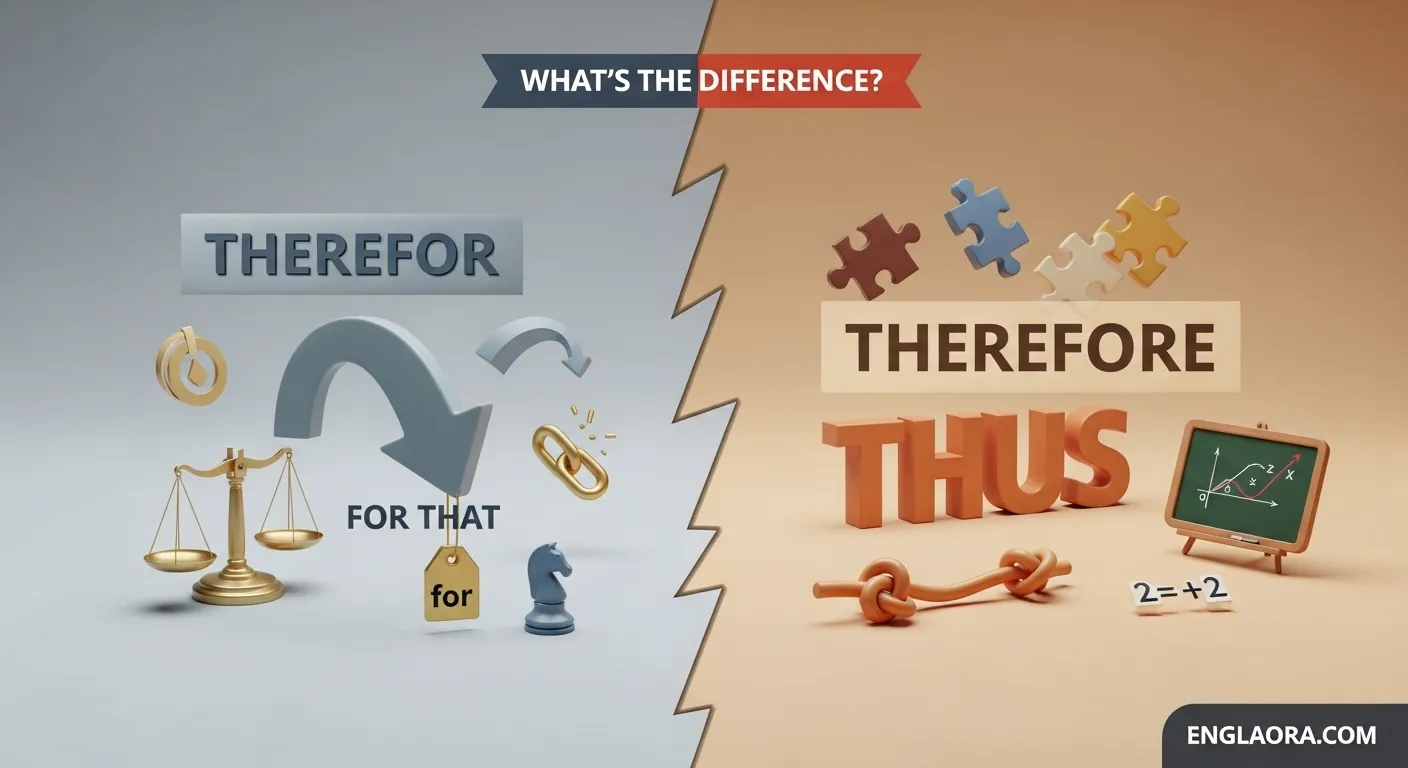
Hey, I want to share something that happened to me recently involving Therefor or Therefore.
I was chatting with a friend when this term suddenly popped up, and honestly, I had no idea what it really meant. For a moment, I kept thinking, “Am I missing something here?” — it was confusing, and I didn’t want to reply the wrong way or sound clueless.
So, I decided to look into Therefor or Therefore to understand the correct meaning and proper usage.
Once I figured it out, everything made sense, and I realized how important it is to know the difference to avoid awkward moments in conversations.
Now, whenever I see Therefor or Therefore in chats or on social media, I feel confident responding the right way.
Therefor or Therefore – Quick Answer
Therefore is the correct word in most contexts. Use “therefore” when you mean “as a result” or “consequently”:
- Example: I forgot my homework; therefore, I received a lower grade.
- Example: The weather was terrible; therefore, the picnic was canceled.
Therefor is rarely used today. It is primarily found in legal, formal, or historical texts, meaning “for that” or “for it”:
- Example: The sum paid therefor is non-refundable.
✅ Quick tip: If you are writing anything outside legal or specialized documents, always use “therefore”.
The Origin of Therefor / Therefore
The word “therefore” originates from Middle English therfor, which combined there + for, literally meaning “for that reason”. Over time, “therefore” became the standard spelling in modern English.
“Therefor”, without the extra e, is an archaic form retained in legal language. It appears in older texts, contracts, and statutes, but is uncommon in everyday writing. Its survival in law is due to historical usage and the precision required in legal terminology.
British English vs American English Spelling
Interestingly, the spelling “therefor” and “therefore” does not change between American and British English. Both dialects use “therefore” in general writing.
| Feature | British English | American English | Notes |
| Standard usage | therefore | therefore | Use for “as a result” |
| Legal texts | therefor | therefor | Rare, formal/legal only |
| Common mistake | therefor | therefor | Many misuse “therefor” in general writing |
✅ Tip: There is no US/UK difference for general usage; confusion comes from historical/legal texts.
Which Spelling Should You Use?
For most audiences worldwide:
- Use “therefore” in emails, essays, social media, and professional writing.
- Use “therefor” only in legal or historical documents where “for that” is intended.
Audience-based advice:
- US / Canada / UK / Commonwealth: Always use therefore unless citing legal text.
- Global English learners: Stick with therefore for clarity and acceptance.
Common Mistakes with Therefor / Therefore
- Writing “therefor” when you mean “as a result”: ❌
- Wrong: I was late, therefor I missed the meeting.
- Correct: I was late, therefore I missed the meeting.
- Wrong: I was late, therefor I missed the meeting.
- Using “therefore” in legal contracts for “for that”: ❌
- Wrong: The payment is made therefore.
- Correct: The payment is made therefor.
- Wrong: The payment is made therefore.
- Confusing it with similar words like there, their, they’re.
- Overusing therefore in a sentence: keep sentences concise.
Therefor / Therefore in Everyday Examples
- Emails: I completed the report on time; therefore, we can proceed with the client meeting.
- News: The company’s profits fell; therefore, layoffs are expected.
- Social Media: It rained all day; therefore, the festival was postponed.
- Formal Writing: The evidence was conclusive; therefore, the hypothesis is confirmed.
Therefor / Therefore – Google Trends & Usage Data
Google searches for “therefore” are significantly higher than “therefor” globally. Searches spike in academic and business contexts, especially in the US, UK, Canada, and Australia. “Therefor” shows minimal search interest, mostly linked to legal phrases.
| Keyword | Global Search Popularity | Typical Context |
| therefore | High | Academic, professional, social writing |
| therefor | Low | Legal, historical, contractual |
FAQs
1. Can I use therefor in emails?
No, use therefore; therefor is formal/legal.
2. Is therefor correct in modern English?
It is correct only in legal contexts.
3. Are there spelling differences in US vs UK?
No, both use therefore generally.
4. How do I remember the difference?
“Therefore” = for that reason, everyday writing. “Therefor” = for that in legal documents.
5. Can I replace therefore with thus?
Yes, thus is a synonym but slightly more formal.
6. Is therefor used in contracts today?
Yes, occasionally, but it is rare.
7. Why do people confuse them?
Because they sound identical and share similar origins.
Conclusion
In conclusion, “therefore” is the correct choice for almost all modern writing, meaning “as a result” or “consequently”. Use “therefor” only in legal or historical documents, meaning “for that”. Knowing the difference will improve your writing clarity, prevent embarrassing mistakes, and make your communication professional. Remember, in global English, sticking to “therefore” ensures acceptance across emails, essays, news, and social media. Misusing these words can lead to confusion, so practice and awareness are key. Use the examples and tips above to write confidently and correctly every time.

Hi, I’m Emma Caldwell, an expert author at Englaora.com. I share clear insights on language differences and provide readers with reliable, easy-to-understand content.