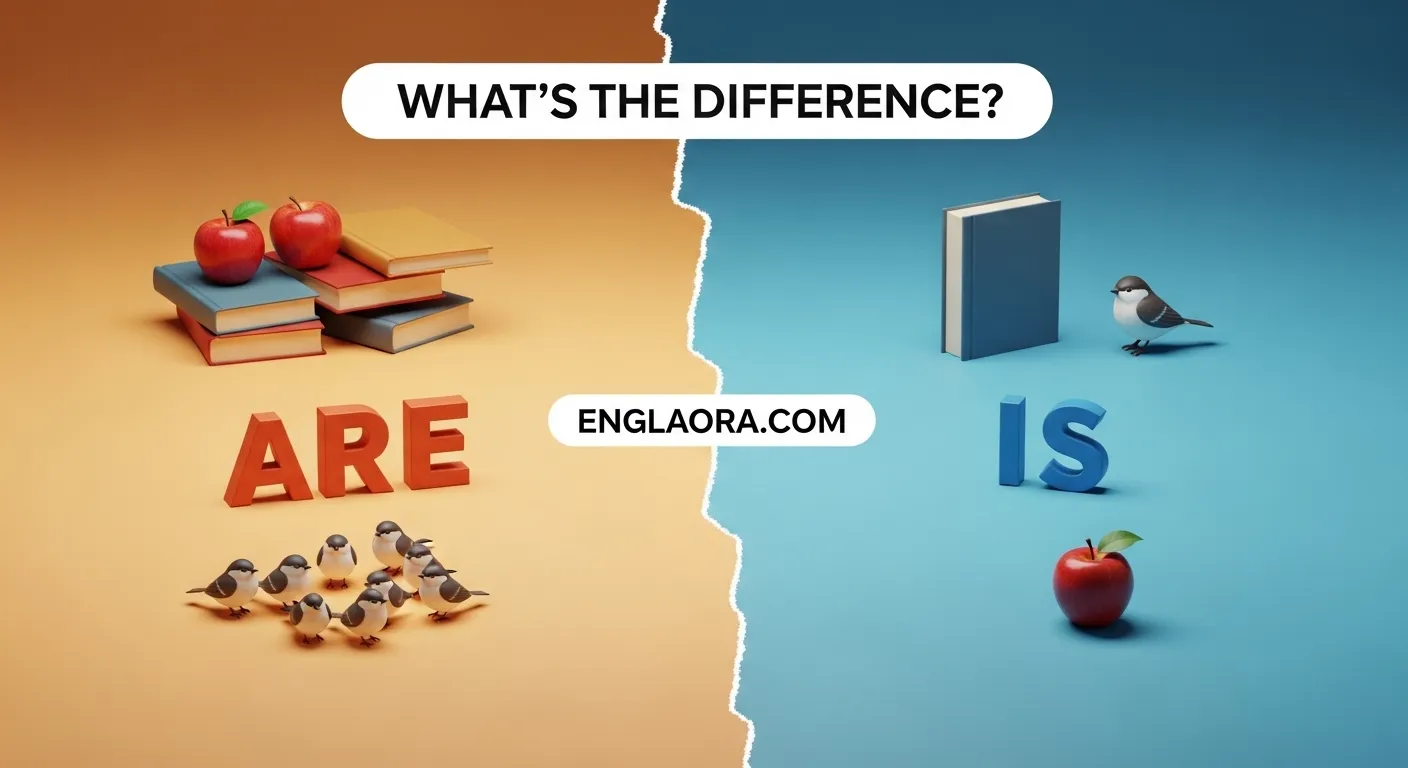
Hey, I want to share something that happened to me recently involving Are or Is.
I was chatting with a friend when these small words suddenly popped up, and honestly, I wasn’t sure which one to use.
For a moment, I kept thinking, “Am I missing something here?” It felt confusing, and I didn’t want to reply the wrong way or sound clueless.
So, I decided to look into Are or Is to understand the correct meaning and proper usage.
Once I figured it out, everything made sense, and I realized how important these tiny words are to avoid awkward moments in conversations.
Now, whenever I see Are or Is in chats or on social media, I feel confident choosing the right one every time.
Are or Is – Quick Answer
- Use “is” with singular subjects:
- Example: The cat is sleeping on the sofa.
- Use “are” with plural subjects:
- Example: The cats are playing in the garden.
Tip: If you’re unsure, identify the subject first. Singular = “is,” Plural = “are.”
The Origin of Are or Is
Both “are” and “is” come from Old English forms of the verb “to be.”
- Is: Comes from Old English “is”, used for singular third-person subjects.
- Are: Comes from Old English “aron”, now used with plural subjects or “you.”
The difference exists because English once had more verb forms, which simplified over time. This simplification caused some confusion, especially for learners, about which form matches the subject.
British English vs American English Spelling
There’s no spelling difference between “are” and “is” in British or American English. The usage rules remain the same, but differences exist in collective nouns:
| Subject Type | British English Example | American English Example |
| Singular noun | The team is winning. | The team is winning. |
| Plural noun (collective) | The team are celebrating. | The team is celebrating. |
| Pronoun “you” | You are welcome. | You are welcome. |
Note: British English often treats collective nouns as plural (“are”), while American English treats them as singular (“is”).
Which Spelling Should You Use?
- US English: Follow standard singular/plural rules; collective nouns = singular.
- UK/Commonwealth English: Acceptable to use plural for collective nouns.
- Global audiences: Stick to standard singular/plural agreement.
Quick rule: Identify the subject and check if it’s singular or plural. This avoids confusion.
Common Mistakes with Are or Is
- Incorrect: The list of items are long.
Correct: The list of items is long. - Incorrect: The team is arguing among themselves. (UK English allows are)
Correct (US): The team is arguing among themselves. - Incorrect: Each of the students are ready.
Correct: Each of the students is ready.
Tip: Watch out for collective nouns and phrases starting with “each,” “everyone,” or “everybody.” Always singular → use “is.”
Are or Is in Everyday Examples
Emails:
- There is a new update on the project.
News Headlines:
- Thousands are protesting against the law.
Social Media:
- You are amazing! #Motivation
Formal Writing:
- The research findings are significant for future studies.
Are or Is – Google Trends & Usage Data
According to Google Trends:
- Searches for “are or is” spike around grammar and writing help queries.
- Most common in US, UK, India, and Canada.
- Users mostly look for quick clarification in writing, emails, and school assignments.
Keyword Variations Comparison
| Variation | Use Case |
| is | Singular subjects |
| are | Plural subjects |
| am | First person singular |
| was | Past tense singular |
| were | Past tense plural |
FAQs
1. Can I use “is” with plural nouns?
- Only in American English for collective nouns; otherwise, use “are.”
2. When do I use “are” with “you”?
- Always: You are my best friend.
3. Is it correct to say “Each of them are ready”?
- No. Use singular: Each of them is ready.
4. Are “is” and “are” interchangeable?
- No. They depend on singular/plural subjects.
5. How do I remember the difference?
- Identify the subject first: singular = “is,” plural = “are.”
6. Can “is” be used in formal writing?
- Yes, when referring to singular subjects.
7. Why do Brits sometimes say “the team are”?
- British English treats collective nouns as plural in many contexts.
Conclusion
Knowing when to use “are” or “is” is essential for clear communication. Remember:
- Singular subjects → is
- Plural subjects → are
- Collective nouns → depends on US/UK rules
Check your subject carefully, especially in emails, social media, and formal writing. Avoid common mistakes with collective nouns and tricky phrases like “each of” or “everyone.” By mastering these simple rules, your writing will be grammatically correct, professional, and easy to read.

I’m Samantha Greene, working at Englaora.com to explain language differences and provide readers with easy-to-understand insights on commonly mistaken terms.