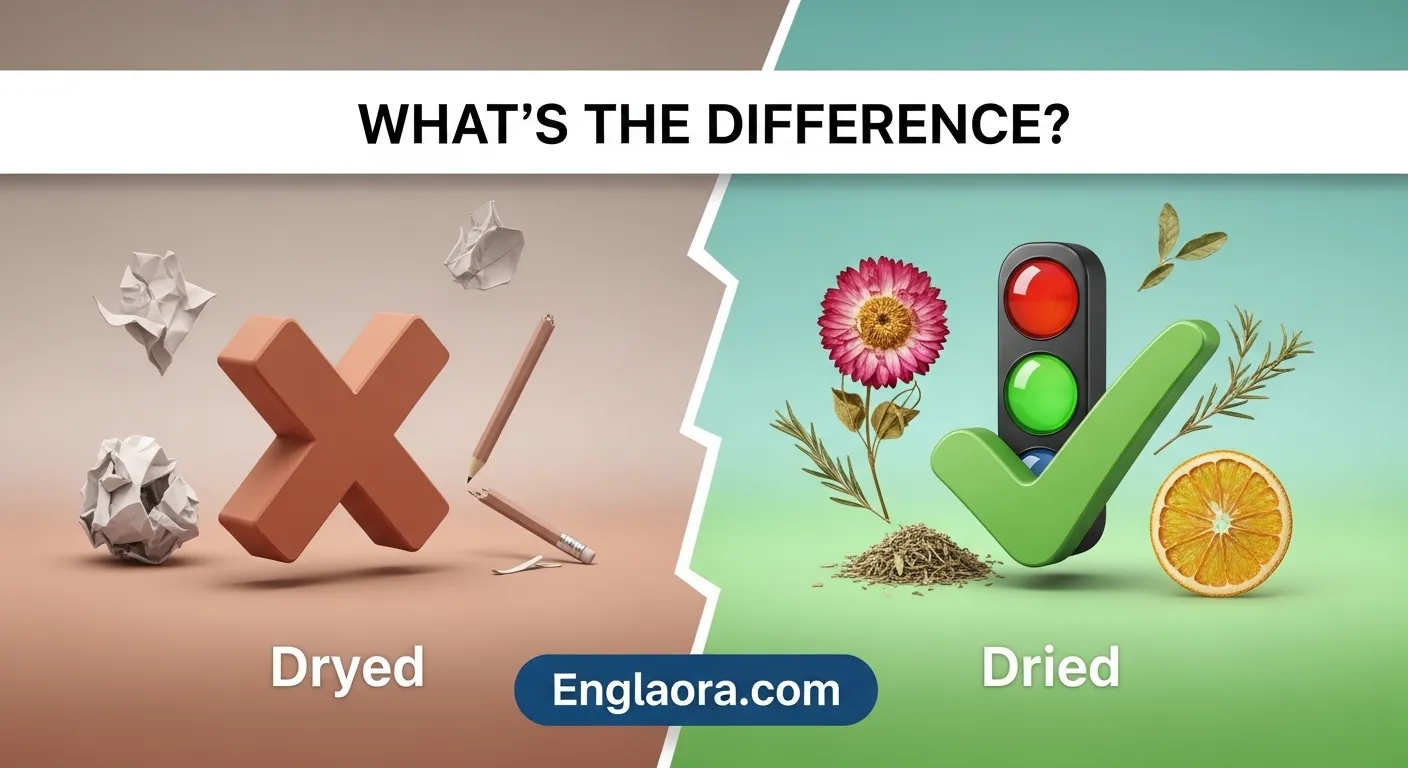
Hey, I want to share something that happened to me recently about Dryed or Dried.
I was chatting with a friend when one of these words suddenly popped up, and honestly, I paused for a second.
I kept thinking, “Wait… is that even correct?” I didn’t want to reply the wrong way or sound unsure, so the confusion stuck with me longer than I expected.
That curiosity pushed me to look deeper into Dryed or Dried and understand what each word actually means and when it should be used.
Once I learned the difference, everything clicked.
I realized how small spelling mistakes like this can easily cause awkward moments in conversations, especially on social media or in casual chats.
After understanding the correct usage, I replied confidently—and it felt great to know I got it right.
Now, whenever I see Dryed or Dried, I don’t hesitate anymore.
Knowing the proper meaning not only clears confusion but also helps you communicate more clearly and confidently every time.
Dried or Dryed – Quick Answer
The correct spelling is “dried”. The word “dryed” is a common misspelling.
Example:
- Correct: I dried the dishes after washing them.
- Incorrect: I dryed the dishes after washing them.
The Origin of Dried or Dryed
The word “dry” comes from the Old English “drȳge”, meaning free from moisture. When forming the past tense, English typically changes “y” to “i” before adding “-ed”, which is why “dry” → “dried”. Over time, some learners assumed the simpler “dryed” spelling was correct, leading to confusion.
British English vs American English Spelling
Both British and American English use “dried”. There is no difference for this word, unlike some words such as “colour” vs “color.”
| Word | British English | American English | Example |
| Dried | ✅ Dried | ✅ Dried | She dried her hair with a towel. |
| Dryed | ❌ Incorrect | ❌ Incorrect | She dryed her hair with a towel. |
Which Spelling Should You Use?
Use “dried” in all forms of English writing. Whether you are in the US, UK, or Commonwealth countries, “dried” is correct. Avoid “dryed”, as it will be seen as a spelling error in professional or formal writing.
Common Mistakes with Dried
- Wrong: I dryed the fruit yesterday.
- Correct: I dried the fruit yesterday.
- Wrong: The towel was dryed in the sun.
- Correct: The towel was dried in the sun.
Tip: Always remember the “y → i” rule before adding -ed.
Comparison Table
| Variation | Correct? | Notes |
| Dried | ✅ Correct | Standard past tense of dry |
| Dryed | ❌ Incorrect | Common mistake, not acceptable |
| Dried out | ✅ Correct | Used for emphasis (e.g., dried out clothes) |
| Dried-up | ✅ Correct | Often used as adjective (e.g., dried-up river) |
Dried in Everyday Examples
- Emails: Please make sure the documents are dried before filing.
- News: Dried fruits are becoming increasingly popular for healthy snacks.
- Social Media: Just dried my hair with the new towel – feels great!
- Formal Writing: Dried herbs enhance the flavor of soups and stews.
Dried – Google Trends & Usage Data
Google Trends shows that searches for “dried” are far more common than “dryed.” Popular contexts include cooking (dried fruits), household chores (dried clothes), and hair care (dried hair). The term is frequently searched in the US, UK, Canada, and Australia.
| Keyword | Average Monthly Searches | Primary Context |
| Dried | 60,000+ | Cooking, household, hair care |
| Dryed | 500+ | Misspelling, language questions |
FAQs
1. Is “dryed” ever correct?
No, it is always considered a misspelling.
2. How do I remember the correct spelling?
Remember: y → i before adding -ed, so “dry” becomes dried.
3. Can I use “dried” for both verbs and adjectives?
Yes. “Dried” can describe something that has lost moisture, e.g., dried fruit.
4. Is “dried” used in formal writing?
Yes, it is correct in emails, essays, articles, and reports.
5. What are similar words with the y → i rule?
Examples:
- Carry → Carried
- Try → Tried
6. Does American and British English spell “dried” differently?
No, “dried” is standard in all English variants.
7. Are there any exceptions to the y → i rule?
Words ending in a vowel + y (like play) just add -ed → played.
Conclusion
The correct spelling is “dried”, and “dryed” is a common mistake. Remember the simple “y → i before -ed” rule. if you are writing emails, recipes, social media posts, or academic papers, using dried ensures clear and professional English. British and American English agree on this spelling, making it universally acceptable. Paying attention to small spelling rules like this improves your writing credibility and avoids confusion. Now, whenever you see “dryed,” you’ll know exactly why it’s wrong and how to correct it confidently.

Hi, I’m Ethan Hawkes, writing for Englaora.com. I provide clear, reliable content to help users understand the differences between commonly confused words.