Hey, I want to share something that happened to me recently involving Hisself or Himself.I was chatting with a friend when this word suddenly popped up, and honestly, I wasn’t sure what it really meant.
For a moment, I kept thinking, “Am I missing something here?” It felt confusing, and I didn’t want to reply the wrong way or sound clueless.
So, I decided to look into Hisself or Himself to understand the correct meaning and proper usage.
Once I figured it out, everything started to make sense. I realized how important it is to know the difference between similar words to avoid awkward moments in conversations.
Now, whenever I see Hisself or Himself in chats or on social media, I feel confident responding the right way.
Hisself or Himself – Quick Answer
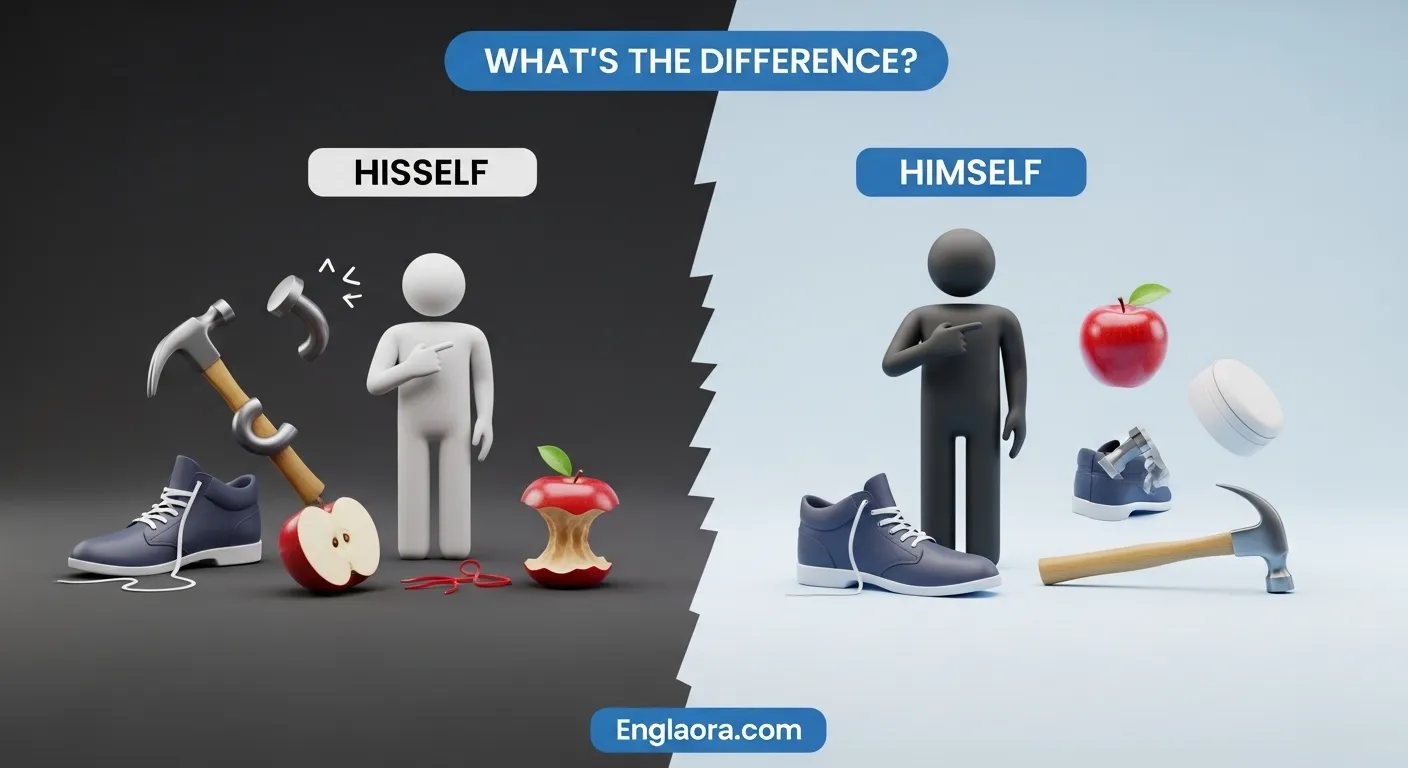
Quick Answer: The correct standard form is “himself.”
- ✅ Correct: He did it himself.
- ❌ Incorrect: He did it hisself.
Tip: Use “himself” in all formal writing, emails, and publications. “Hisself” may appear in older texts or regional dialects but is considered nonstandard today.
The Origin of Hisself or Himself
“Himself” comes from Old English “him self,” combining the pronoun “him” with “self” to emphasize the subject. Over centuries, the two words merged into “himself.”
“Hisself” also appeared in Middle and Early Modern English, influenced by the possessive “his.” For example:
- Middle English: He taught hisself to read.
While “hisself” survived in some dialects (especially in rural areas of England and the U.S.), it eventually fell out of standard use. Modern English dictionaries recognize “himself” as the only correct standard spelling.
British English vs American English Spelling
Both British and American English use “himself”. “Hisself” is nonstandard in all varieties. However, regional dialects in both countries may still use “hisself.”
| Form | British English | American English | Notes |
| himself | ✅ Correct | ✅ Correct | Standard in all writing |
| hisself | ❌ Nonstandard | ❌ Nonstandard | Dialectal; avoid in formal writing |
Key Point: Spelling rules are consistent across English-speaking countries—always choose “himself” in professional writing.
Which Spelling Should You Use?
- Use “himself” for:
- Emails, reports, essays, news articles
- Social media posts (for standard grammar)
- Teaching or learning English
- “Hisself” might appear in:
- Historical texts
- Regional dialects in casual speech
- Creative writing to reflect dialect
Advice: If you’re unsure, always go with “himself.” It’s universally accepted and professional.
Common Mistakes with Hisself or Himself
Many writers mistakenly use “hisself” thinking it matches the possessive “his.” Common errors include:
- ❌ He made hisself a sandwich. → ✅ He made himself a sandwich.
- ❌ The dog scratched hisself. → ✅ The dog scratched himself.
Tip: If the word doesn’t sound formal or correct in professional writing, it’s likely hisself, which should be avoided.
Hisself or Himself in Everyday Examples
Emails:
- Correct: Please complete the report yourself or ask him to do it himself.
News:
- Correct: The CEO congratulated himself on the company’s success.
Social Media:
- Correct: He surprised himself by finishing the marathon!
Formal Writing:
- Correct: Each participant must submit their work themselves or with assistance from themselves.
Hisself or Himself – Google Trends & Usage Data
Google Trends shows “himself” is searched far more often than “hisself.”
- Top countries searching “himself”: USA, UK, India, Australia
- Top countries searching “hisself”: Rare, mostly in US regional dialect studies
- Context: Queries often relate to grammar rules, learning English, or writing exams.
Insight: The overwhelming preference for “himself” reinforces its standard status in modern English.
Keyword Variations Comparison Table
| Variation | Standard? | Usage Context |
| himself | ✅ Yes | All formal and informal writing |
| hisself | ❌ No | Dialect, historical, or informal use |
FAQs
- Is “hisself” correct?
❌ No, it is nonstandard. Use “himself.” - Why do some people say “hisself”?
It comes from historical dialects and older English forms. - Can “hisself” be used in creative writing?
✅ Yes, to reflect dialect or character speech. - Is “himself” used in British and American English?
✅ Yes, it’s standard in all English varieties. - How do I remember the correct form?
Think of the original pronoun + self: him + self = himself. - Is “hisself” found in dictionaries?
Yes, but marked as nonstandard or dialectal. - Can “himself” be used for animals?
✅ Yes, especially in anthropomorphized contexts, e.g., The cat prided himself on catching mice.
Conclusion
The correct choice between “hisself” and “himself” is clear: always use “himself” in formal, standard, and professional writing. Hisself exists as a dialectal or historical variant but is no longer accepted in mainstream English.
Understanding this distinction helps avoid common grammar mistakes, ensures clarity, and maintains credibility. Whether you’re writing emails, essays, news articles, or social media posts, sticking to “himself” guarantees correctness. While “hisself” may appear in older texts or creative writing, it should be used cautiously. By learning the origin, comparing variations, and checking usage examples, you can confidently choose the right form every time. Remember: correct spelling matters, and himself is the universally accepted choice.

I’m Samantha Greene, working at Englaora.com to explain language differences and provide readers with easy-to-understand insights on commonly mistaken terms.