Hey, I want to share something that happened to me recently about Labour or Labor.
I was chatting with a friend when this term suddenly popped up, and honestly, I had no clear idea what it meant at first. I kept thinking, “Am I missing something here?” It felt a bit confusing, and I didn’t want to reply the wrong way or sound unsure.
So, I decided to look into Labour vs Labor and understand its real meaning and usage. Once I figured it out, I realized how important it is to know the difference—especially to avoid awkward moments in conversations, chats, or on social media.
After learning the correct context, I replied confidently, and now I feel completely prepared whenever I see Labour or Labor again.
Labour or Labor – Quick Answer
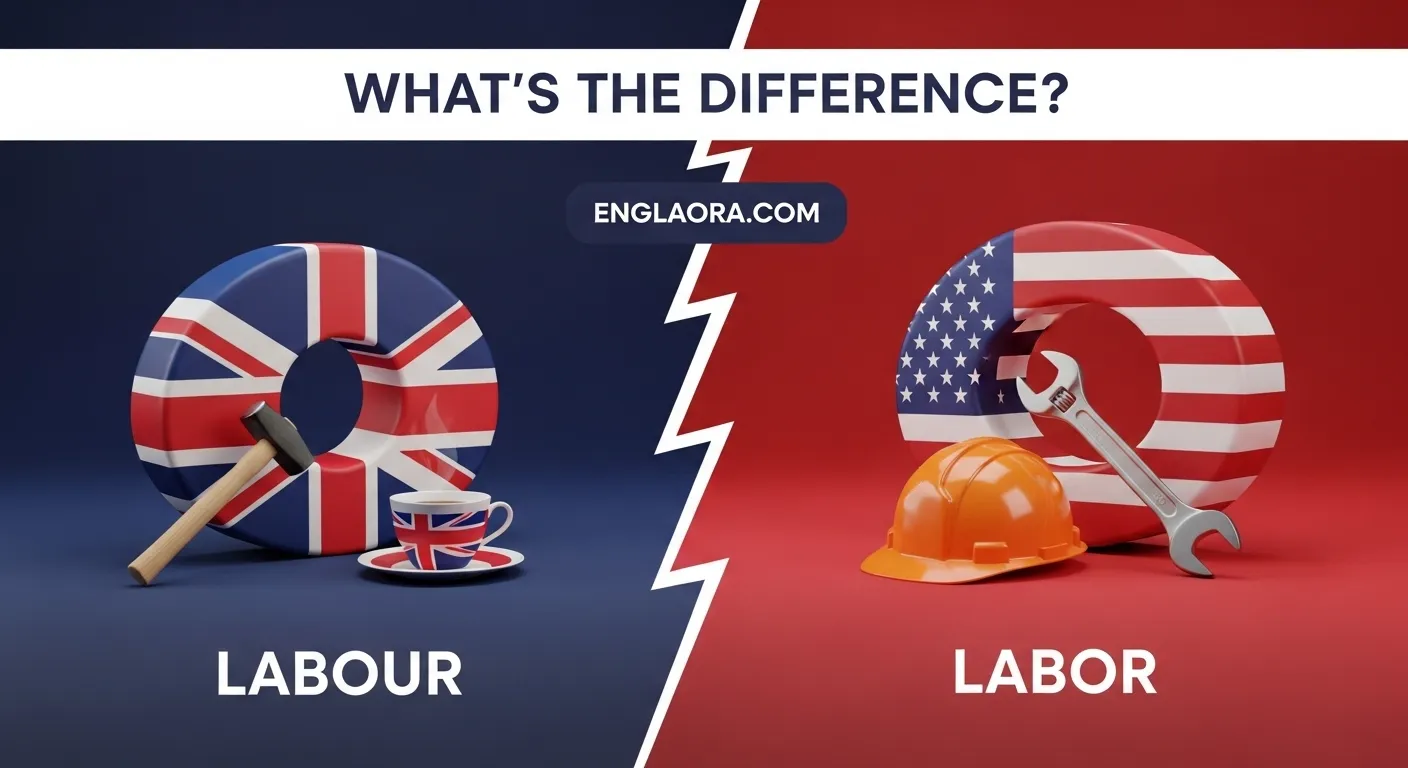
“Labour” and “labor” mean the same thing.
The only difference is spelling, not meaning.
- Labour → British English
- Labor → American English
Example:
- UK: Manual labour is physically demanding.
- US: Manual labor is physically demanding.
Both refer to work, effort, or childbirth. The correct choice depends on your audience, not grammar rules.
The Origin of Labour or Labor
The word comes from the Latin “labor”, meaning work, effort, or hardship. It entered English through Old French as “labour”.
In the early 1800s, American English began simplifying spellings. Noah Webster promoted shorter forms to make spelling more logical and consistent.
That’s why:
- Labour → Labor
- Colour → Color
- Honour → Honor
The spelling difference exists because of language evolution, not meaning or pronunciation.
Vallies or Valleys: Meaning, Grammar and Correct Usage(2026)
British English vs American English Spelling
British English keeps the original -our ending, while American English removes the “u”.
Spelling Comparison Table
| British English | American English | Meaning |
| Labour | Labor | Work or effort |
| Labourer | Laborer | Worker |
| Labour market | Labor market | Employment system |
| Labour law | Labor law | Employment laws |
Pronunciation remains the same in both versions.
Which Spelling Should You Use?
Choose based on who will read your content.
- US audience → Use labor
- UK audience → Use labour
- Canada, Australia, New Zealand → Use labour
- Global or SEO content → Pick one spelling and stay consistent
Professional tip:
Mixing both spellings in one document looks unprofessional.
Common Mistakes with Labour or Labor
Here are frequent errors people make:
- ❌ Mixing spellings in the same article
✅ Choose one spelling and stay consistent - ❌ Thinking meanings are different
✅ Both words mean the same thing - ❌ Using “labour” in US legal documents
✅ Use “labor” for American contexts - ❌ Using “labor” in UK exams or academia
✅ Use “labour” in British settings
Labour or Labor in Everyday Examples
Email:
- The company follows strict labor laws. (US)
- The company follows strict labour laws. (UK)
News:
- Labor unions demand better wages.
- Labour unions demand better wages.
Social Media:
- Hard work and labor pay off.
- Years of labour finally paid off.
Formal Writing:
- The labor market is changing rapidly.
- The labour market is changing rapidly.
Labour or Labor – Google Trends & Usage Data
Search data shows clear regional preferences:
- United States → “labor” dominates
- United Kingdom → “labour” dominates
- Australia & Canada → “labour” is preferred
- Global searches → Both are popular, depending on location
People usually search this keyword to avoid spelling mistakes and write correctly for their audience.
Keyword Variations Comparison Table
| Term | Region | Correct Usage |
| Labour | UK, Commonwealth | Preferred |
| Labor | USA | Preferred |
| Labour laws | UK | Correct |
| Labor laws | USA | Correct |
| Labour pain | UK | Correct |
| Labor pain | USA | Correct |
FAQs
1. Are labour and labor different words?
No. They have the same meaning but different spellings.
2. Which spelling is correct in English?
Both are correct. It depends on the English version.
3. Is “labour” wrong in American English?
It’s understandable, but considered non-standard.
4. Is “labor” wrong in British English?
Yes, it’s usually marked as incorrect in UK writing.
5. Which spelling is better for SEO?
Use the spelling your target audience searches for.
6. Can I use both spellings together?
No. It looks unprofessional and confusing.
7. Do pronunciation or meaning change?
No. Only the spelling changes.
Conclusion
The difference between labour and labor is simple but important. Both words mean the same thing—work, effort, or physical activity—but their spelling depends entirely on regional English rules.
If you’re writing for a US audience, always use labor. For the UK and Commonwealth countries, labour is the correct choice. Neither spelling is better or more “correct” than the other; the key is consistency and audience awareness.
Understanding this distinction helps you write with confidence, avoid mistakes, and sound professional in emails, articles, legal content, and online publishing. Once you know who you’re writing for, the choice becomes effortless.
When in doubt, decide your target audience first—and let that guide your spelling.

I’m Liam Prescott, writing for Englaora.com. I explain the nuances of commonly confused words, making complex topics simple and engaging for readers.