Hey, something funny happened to me recently with the terms “Lays” and “Lies.”
I was chatting with a friend when I suddenly saw one of these words pop up, and honestly, I had no clue which was correct at first.
I kept wondering, “Am I missing something here?” It was a little confusing, and I didn’t want to respond the wrong way.
So, I decided to dig into the meaning and context of Lays vs Lies.
After figuring it out, I realized how important it is to know the difference to avoid awkward moments in conversations.
Now, I feel confident and ready to use these words correctly the next time they show up in chats or on social media.
Lays or Lies – Quick Answer
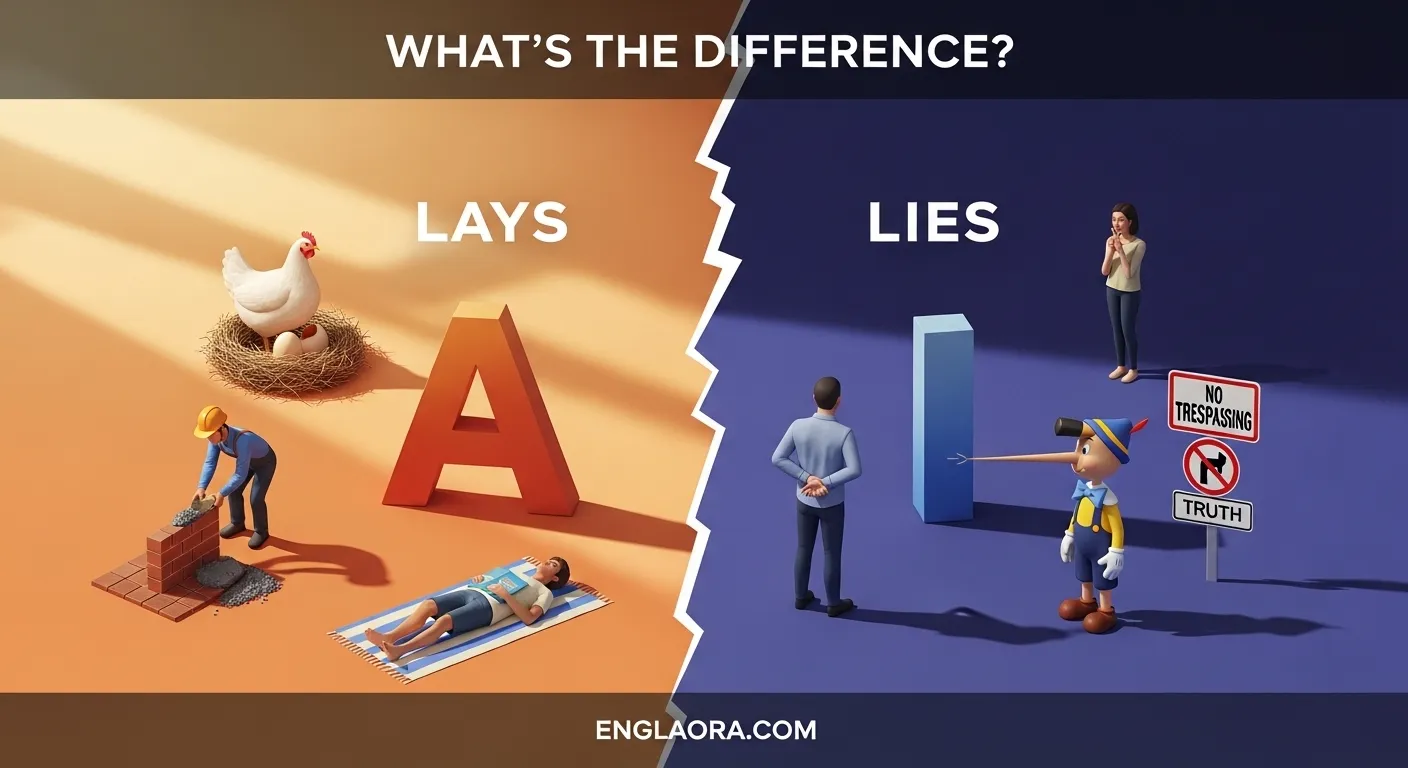
- Lays: Present tense of “to lay”, meaning to put something down. It requires a direct object.
- Example: She lays the book on the table every evening.
- Example: She lays the book on the table every evening.
- Lies: Present tense of “to lie”, meaning to recline or be in a horizontal position. It does not require an object.
- Example: He lies on the sofa after work.
- Example: He lies on the sofa after work.
Quick tip: If you can replace the word with “places”, use lays. If you mean reclines, use lies.
The Origin of Lays or Lies
The words “lay” and “lie” have different roots:
- Lay comes from Old English “lecgan”, meaning to place or put down.
- Lie comes from Old English “licgan”, meaning to recline.
Over centuries, these verbs evolved with different conjugation patterns, which is why people often confuse lays and lies today. Historical texts show consistent differentiation, but spoken English has blurred the lines in casual conversation.
British English vs American English Spelling
Both British and American English use lays and lies, but some related forms differ:
| Verb | Present | Past | Past Participle | Example (UK) | Example (US) |
| Lay | lays | laid | laid | She lays the tray on the table. | She lays the tray on the table. |
| Lie | lies | lay | lain | He lies down every afternoon. | He lies down every afternoon. |
Key differences:
- The past tense of lie is lay, which confuses many learners.
- British and American English spellings for these verbs are mostly the same, but usage frequency may vary.
Which Spelling Should You Use?
- US Audience: Standard American English rules apply—use lays for placing and lies for reclining.
- UK/Commonwealth Audience: Use the same rules, but British readers may encounter “lain” more often in formal writing.
- Global Context: If writing for an international audience, stick to standard grammar and avoid slang forms to reduce confusion.
Common Mistakes with Lays or Lies
- ❌ He lays on the couch. → ✅ He lies on the couch.
- ❌ She lies the keys on the table. → ✅ She lays the keys on the table.
- Confusing past tense: ❌ Yesterday, he lied on the sofa. → ✅ Yesterday, he lay on the sofa.
Tip: Always check whether the verb needs a direct object. No object? Then it’s likely lies.
Lays or Lies in Everyday Examples
- Emails: “Please ensure the files lie on my desk before 5 PM.”
- News: “The statue lies in the town square.”
- Social Media: “My cat lays on my laptop every morning.”
- Formal Writing: “Responsibilities lie with the project manager.”
Lays or Lies – Google Trends & Usage Data
Search trends show that “lays or lies” spikes when students, writers, or professionals want quick grammar guidance.
- Top countries searching: United States, India, UK, Canada, Australia.
- Common contexts: Grammar help, school assignments, professional writing, social media captions.
Usage data suggests that online confusion remains high due to past tense irregularities and casual speech influences.
Comparison Table
| Feature | Lays | Lies |
| Meaning | Puts something down | Reclines or rests |
| Requires Direct Object | Yes | No |
| Present Tense | lays | lies |
| Past Tense | laid | lay |
| Past Participle | laid | lain |
| Example | She lays the plate. | He lies on the bed. |
FAQs
- Can “lays” be used for reclining?
No. Use lies when someone or something is in a horizontal position. - Is “lie” past tense “lied”?
Only for telling a falsehood. For reclining, past tense is lay. - Why is this confusing?
Because the verbs sound similar and irregular past tenses overlap with other meanings. - Can I use “lays” in British English?
Yes, rules are the same, but formal UK texts may prefer precise verb forms. - How do I remember?
Ask: “Am I placing something down? → lays. Am I reclining? → lies.” - Is “lying down” correct?
Yes. “Lying” is the present participle of lie (reclining). - What about social media captions?
Always check context. If your pet is on the couch, it lies. If you put it there, it lays.
Conclusion
Understanding lays or lies is simple once you know the difference: lays = put something down, lies = recline. Pay attention to direct objects and past tense irregularities. Use standard grammar for emails, assignments, social media, or professional writing to avoid confusion. British and American English share similar rules, so choosing the correct word is mostly about clarity and context. Regular practice and consulting quick-reference guides can help you master these tricky verbs, making your writing precise and professional.
Discover More Articles:
Neighbour vs Neighbor: English Grammar Explained(2026)
Analyzing or Analysing: Meaning, Grammar and Usage(2026)
Tased or Tazed: Meaning,Grammar and Correct Usage(2026)

I’m Samantha Greene, working at Englaora.com to explain language differences and provide readers with easy-to-understand insights on commonly mistaken terms.