Hey, I want to share something that happened to me recently about Miss or Misses.
While chatting with a friend, I suddenly came across these words, and honestly, I felt a bit confused at first.
I kept thinking, “Am I using the right one, or am I missing something?” Since I didn’t want to reply the wrong way and create an awkward moment, I decided to look deeper into the meaning and proper usage of Miss or Misses.
After understanding the difference, I realized how important it is to know when to use each term correctly—especially in everyday conversations, chats, and social media.
Now that I’m clear on Miss or Misses, I feel much more confident and ready to use the right word whenever it comes up again.
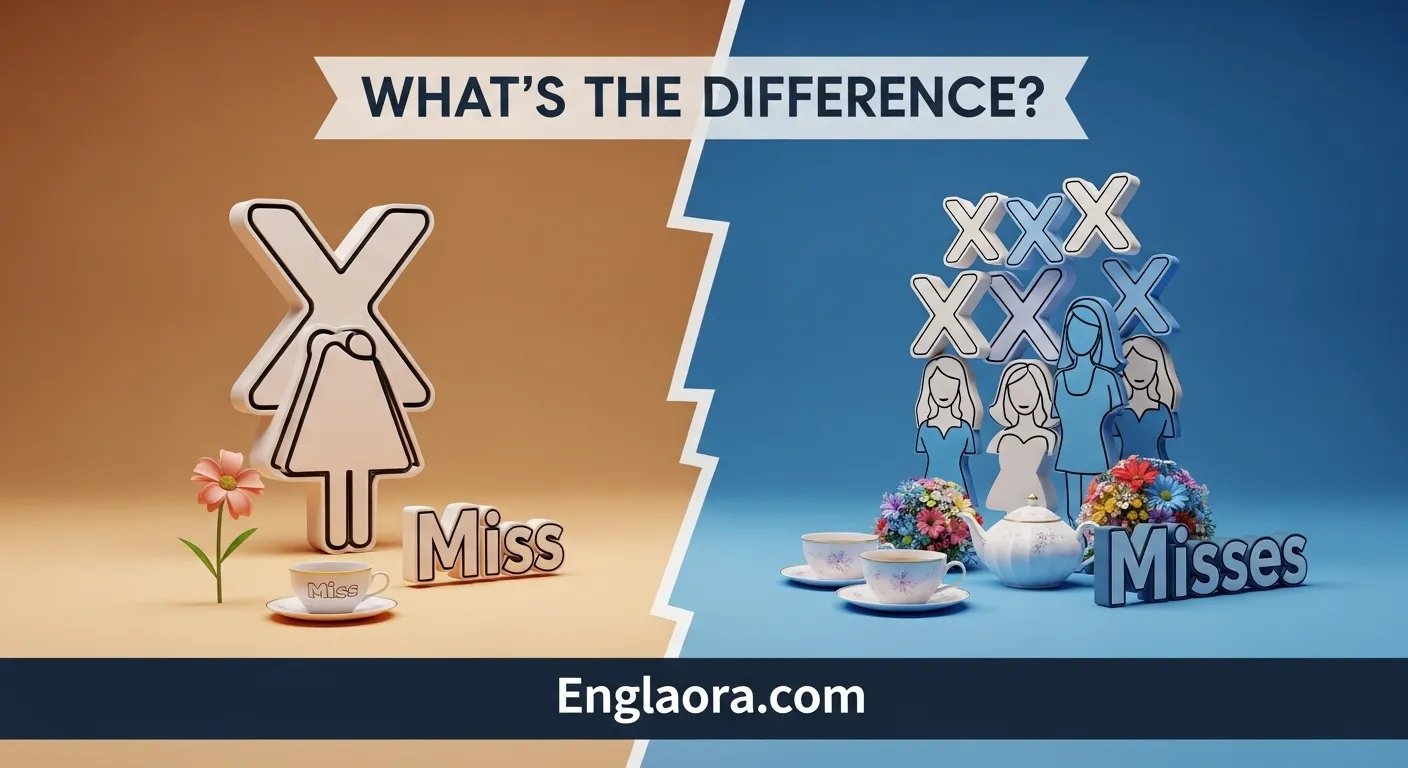
Miss or Misses – Quick Answer
- Miss → Used with I, you, we, they, or the base form of a verb.
- Example: I miss my family.
- Example: I miss my family.
- Misses → Used with he, she, it or third-person singular.
- Example: She misses her friends.
- Example: She misses her friends.
Rule of thumb: If the subject is singular third-person, add -es; otherwise, use the base form miss.
The Origin of Miss or Misses
The word “miss” comes from Old English missan, meaning to fail, lose, or not hit the mark. Over time, it evolved into the modern verb we use today to express longing or absence.
The -es ending comes from English grammar rules for third-person singular verbs in the present tense. In short, “misses” is just the third-person singular form of miss. This explains why both forms exist and why many learners get confused.
British English vs American English Spelling
Both British English and American English use miss and misses in the same way. There is no spelling difference here. The rules are identical, unlike words such as colour/color or realise/realize.
| Subject | Verb Form (US & UK) | Example |
| I / you / we / they | miss | I miss the bus. |
| He / she / it | misses | He misses the bus. |
✅ Tip: Focus on subject-verb agreement, not spelling differences.
Which Spelling Should You Use?
- Use “miss” for I, you, we, they.
- Use “misses” for he, she, it.
Audience advice:
- US, UK, and Commonwealth countries → The same rule applies.
- Global English readers → Always follow the subject-verb agreement rather than worrying about regional differences.
Common Mistakes with Miss or Misses
- ❌ She miss her family. → ✅ She misses her family.
- ❌ They misses the train. → ✅ They miss the train.
- ❌ It miss the point. → ✅ It misses the point.
Tip: Check your subject carefully. The verb must agree in number and person.
Miss or Misses in Everyday Examples
- Emails: I miss your reply on this matter.
- News: The player misses the penalty shot.
- Social Media: She misses her old school friends.
- Formal Writing: The company misses the deadline if actions are delayed.
Miss or Misses – Google Trends & Usage Data
Data from Google Trends shows that searches for “miss vs misses” spike in English-learning countries like India, the Philippines, and the UK. Users mostly search for grammar clarification, correct usage, and writing tips.
| Variation | Popularity | Common Use Case |
| miss | High | Everyday writing & social media |
| misses | High | Third-person singular sentences |
Smoothe or Smooth: Understanding the Right Word and Usage(2026)
FAQs
- What is the difference between miss and misses?
- Miss is base form; misses is third-person singular present tense.
- Miss is base form; misses is third-person singular present tense.
- Can I use misses with I or we?
- No. Use miss with I, you, we, or they.
- No. Use miss with I, you, we, or they.
- Is there a British vs American spelling difference?
- No. Both use the same spelling.
- No. Both use the same spelling.
- How do I know when to use misses?
- Check if the subject is he, she, or it.
- Check if the subject is he, she, or it.
- Can “miss” be a noun?
- Yes. Miss can refer to a young woman (e.g., Miss Smith) or a failure to hit something.
- Yes. Miss can refer to a young woman (e.g., Miss Smith) or a failure to hit something.
- Is “misses” ever used as a noun?
- Yes. In plural form, misses refers to failures or mistakes.
- Yes. In plural form, misses refers to failures or mistakes.
- Are there shortcuts to remember?
- Yes. If singular third-person → misses; else → miss.
- Yes. If singular third-person → misses; else → miss.
Conclusion
Understanding miss vs misses is simple once you remember the subject-verb rule. Use miss for I, you, we, or they, and misses for he, she, or it. Both British and American English use the same spelling, so your main focus should be on correct grammar and sentence structure. Avoid common mistakes by checking your subject carefully, and you’ll never confuse these forms again. With these tips, examples, and tables, you can write emails, social posts, or formal documents confidently. Remember, small details like this can make your writing clear and professional.

I’m Samantha Greene, working at Englaora.com to explain language differences and provide readers with easy-to-understand insights on commonly mistaken terms.