Hey, I want to share something that happened to me recently about Whack or Wack. I was chatting with a friend when one of these words suddenly popped up, and honestly, I paused for a moment.
I wasn’t sure which one was correct or what it really meant in that context. So, I decided to look into Whack or Wack to understand the real difference, meaning, and proper usage.
Once I figured it out, everything made sense. It made me realize how important it is to know the right word—especially in casual chats and on social media.
Now, whenever I see Whack or Wack, I feel confident responding the right way without any confusion.
Whack or Wack – Quick Answer
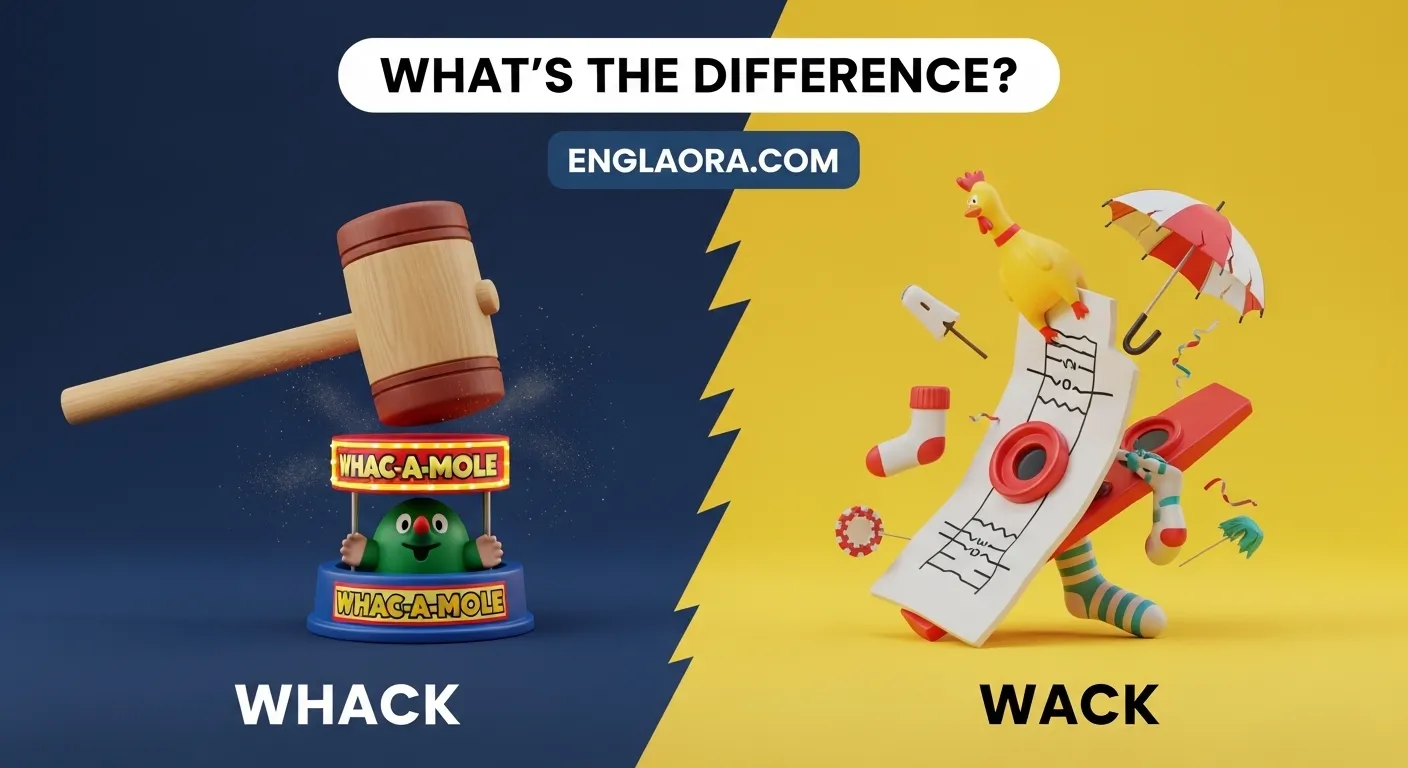
The correct spelling is “whack”. It’s widely accepted in dictionaries and formal writing.
- ✅ Correct: He gave the ball a good whack.
- ❌ Incorrect: He gave the ball a good wack.
“Wack” is often used in slang, especially in American English, to describe something bad, weird, or uncool. Example: That movie was wack.
| Variation | Usage | Example |
| Whack | Standard, formal & informal | He whacked the pinata with a bat. |
| Wack | Slang, informal | This pizza tastes wack. |
The Origin of Whack or Wack
The word “whack” dates back to the late 16th century, meaning “to strike.” Its roots are likely onomatopoeic, mimicking the sound of a hit.
Over time, “wack” emerged as a slang variation, mainly in American English, representing poor quality or strangeness. Dictionaries do not consider “wack” standard spelling outside of slang contexts.
The spelling difference exists because language evolves differently in formal writing versus slang culture. While “whack” retains the traditional spelling, “wack” is embraced in pop culture, music, and casual speech.
British English vs American English Spelling
Both British and American English use “whack” as the standard form. However, slang usage of “wack” is more common in American English.
| Feature | British English | American English |
| Standard spelling | Whack | Whack |
| Slang use | Rare | Common (wack = bad/strange) |
| Example | He whacked the ball. | That party was wack. |
So, for professional writing, “whack” is safe everywhere. “Wack” is mainly for informal, slang-heavy contexts in the U.S.
Which Spelling Should You Use?
- Formal writing, emails, essays, news → Always use whack.
- Casual texting, social media, slang-heavy writing → wack can be used in American English, but avoid in professional contexts.
- Global audience → Stick to whack for clarity and acceptance.
Common Mistakes with Whack or Wack
People often confuse the two forms, leading to errors:
- Writing wack in professional emails. ✅ Correction: whack
- Using whack to describe slang meanings like “lousy” or “uncool.” ✅ Correction: wack in informal speech.
- Mispronouncing or misreading the word due to unfamiliarity with slang context.
Whack or Wack in Everyday Examples
Emails/Professional:
- He gave the table a solid whack to fix the leg. ✅
Social Media/Informal:
- That new song is totally wack. ✅
News/Reports:
- The striker whacked the ball into the goal. ✅
Using context correctly ensures your writing sounds appropriate.
Whack or Wack – Google Trends & Usage Data
- Whack shows stable usage globally in formal and informal writing.
- Wack spikes in American slang-related content, social media posts, and music discussions.
- Countries like the UK, Australia, and Canada favor whack exclusively, while the U.S. shows mixed usage depending on context.
Keyword Variations Comparison Table
| Variation | Correct Usage | Informal/Slang | Region |
| Whack | ✅ Standard/All writing | ❌ Not slang | Global |
| Wack | ❌ Not formal | ✅ Slang/Informal | US-focused |
FAQs
1. Is “wack” a word?
Yes, it’s slang for something bad or weird, mostly in American English.
2. Can I use “wack” in professional writing?
No, always use whack for formal contexts.
3. Is “whack” British or American English?
It’s correct in both British and American English.
4. Why do people confuse “whack” and “wack”?
Slang use and phonetic spelling in pop culture create confusion.
5. Can “wack” be used positively?
Rarely; it almost always has a negative or odd connotation.
6. How do I remember which spelling is correct?
Think: whack → hitting something (formal), wack → slang for bad/strange.
7. Are there similar spelling issues with other words?
Yes, like “color vs colour” or “theater vs theatre,” but whack/wack is context-dependent.
Conclusion
In summary, “whack” is the standard spelling suitable for all writing forms, while “wack” is informal slang, primarily in American English. Use whack for professional, academic, or international writing to avoid mistakes. Reserve wack for casual, playful contexts like social media, texting, or pop culture references. Understanding these differences helps you communicate clearly and confidently, no matter your audience.
Remember: formal = whack, slang = wack. Mastering this simple rule will save you from common errors and make your writing precise, professional, and contextually appropriate.
Read More Article’s:
Baptized or Baptised: Spellings Explained with Example(2026)
Savior or Saviour: Which Spelling Is Correct and Why(2026)
Yeah or Yea: Clear Explanation with Easy Examples(2026)

Hi, I’m Emma Caldwell, an expert author at Englaora.com. I share clear insights on language differences and provide readers with reliable, easy-to-understand content.