Hey, I want to share something that happened to me recently involving nature or nurture.
I was chatting with a friend about why people behave the way they do.
My friend suddenly said, “It’s all about nature vs nurture.” Honestly, I paused for a moment. I had heard the phrase before, but I wasn’t completely sure what it really meant.
For a moment, I kept thinking, “Am I missing something here?” Was it about genetics? Or was it about how people are raised? It felt confusing, and I didn’t want to respond the wrong way or sound clueless in the conversation.
So, I decided to look into nature or nurture to understand the real meaning behind this famous idea. Once I started reading about it, everything began to make sense.
I learned that this phrase is used in psychology, science, and everyday conversations to explain why people act the way they do.
Now whenever I hear someone talk about nature vs nurture, I understand that they are discussing one big question:
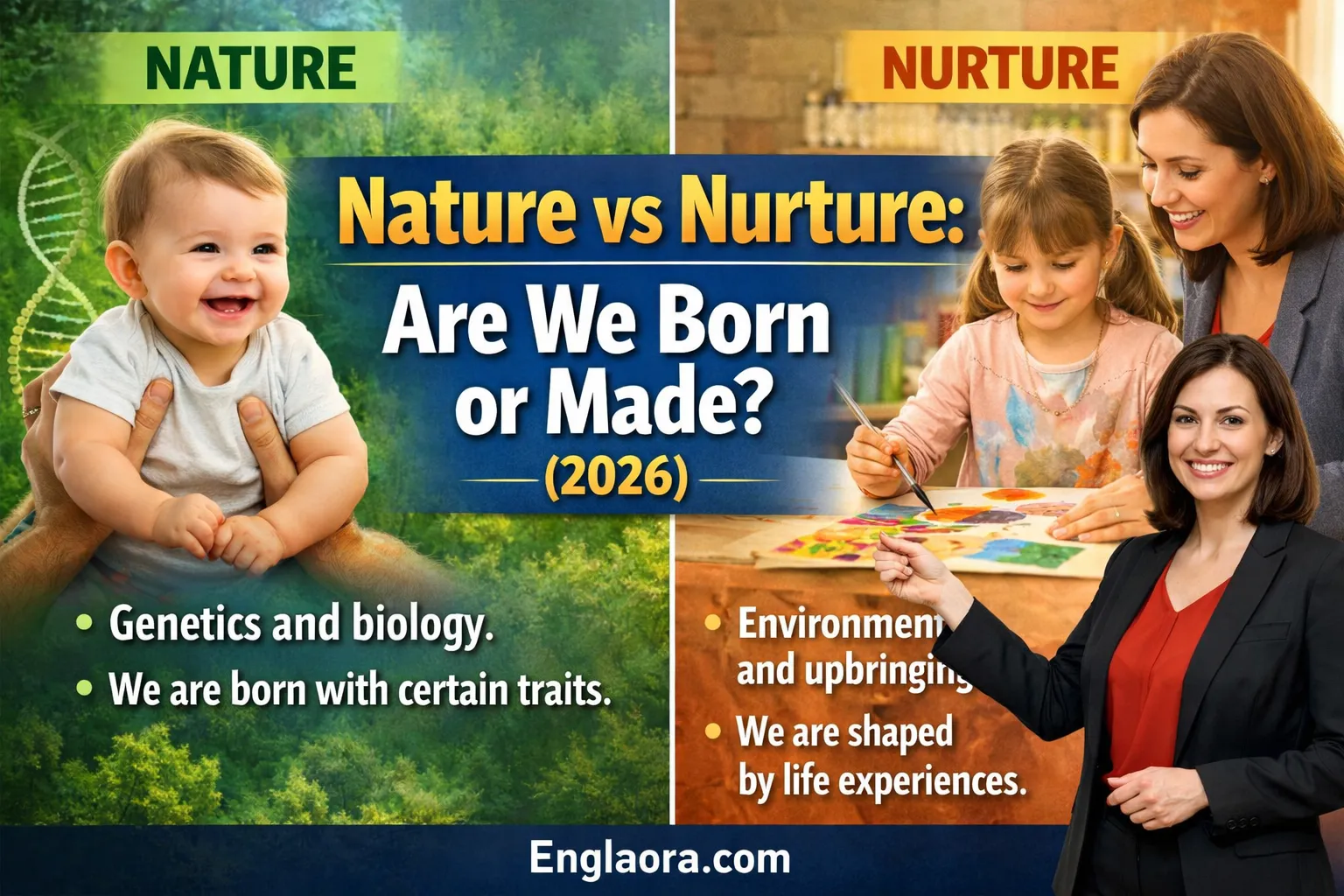
Are we shaped more by our genes (nature) or by our environment and experiences (nurture)?
Understanding this difference helps people talk about personality, intelligence, behavior, and even success in life with much more clarity.
What Is The Difference Between Nature And Nurture?
The difference between nature and nurture is simple.
Nature means the traits you are born with. These come from your genes.
Examples include eye color, natural talents, and some personality traits.
Nurture means the things you learn from your environment.
This includes family, culture, education, and life experiences.
For example:
- A child may be naturally good at music (nature).
- But practicing music with a teacher improves the skill (nurture).
So, nature is biology, while nurture is environment.
What Are Good Examples Of Nature Vs. Nurture?
Many real-life examples show the difference.
Examples of nature:
- Eye color
- Natural height
- Genetic diseases
- Natural talent in sports
Examples of nurture:
- Learning a language
- Education and schooling
- Parenting style
- Cultural traditions
Example scenario:
Two children may be born with strong intelligence (nature).
But the child with better education and support may perform better (nurture).
What Did Freud Say About Nature Vs. Nurture?
Sigmund Freud believed that early childhood experiences are very important.
Freud thought personality develops through:
- Childhood memories
- Family relationships
- Emotional experiences
This means Freud believed nurture plays a major role in shaping human behavior.
He believed that experiences during the first few years of life strongly influence personality.
What Was John Locke’s Theory On Nature Vs. Nurture?
Philosopher John Locke had a very famous idea called Tabula Rasa.
Tabula Rasa means “blank slate.”
Locke believed:
- Babies are born with empty minds.
- Life experiences shape who they become.
This idea strongly supports nurture over nature.
According to Locke, education and environment are the most powerful forces in development.
Nature Vs Nurture Examples
Here are simple examples:
| Situation | Nature | Nurture |
|---|---|---|
| Athletic ability | Natural body strength | Training and practice |
| Intelligence | Brain genetics | Education |
| Language | Ability to speak | Learning words |
| Personality | Temperament | Parenting style |
Both factors often work together.
Nature Vs Nurture Psychology
In psychology, nature vs nurture is one of the oldest debates.
Psychologists study:
- Behavior
- Personality
- Intelligence
- Mental health
Modern psychology believes both nature and nurture matter.
Genes create possibilities, but experiences shape how those possibilities develop.
Nature Vs Nurture Debate
The nature vs nurture debate asks a simple question:
What matters more?
- Genetics
- Environment
For many years scientists argued about which one is stronger.
Today, most experts agree that both are important and work together.
Is Nature Or Nurture More Important
There is no simple answer.
Nature provides the genetic foundation.
Nurture shapes how that foundation develops.
Example:
A child may inherit musical ability (nature).
But without practice and training (nurture), the talent may never grow.
So, both factors are equally important.
Nature Or Nurture Topics
Common topics related to this debate include:
- Intelligence and IQ
- Personality traits
- Mental health
- Language development
- Human behavior
- Talent and skills
Researchers often study twins to understand how genes and environment affect people.
Nature Vs Nurture Child Development
Child development is strongly influenced by both.
Nature influences:
- Growth
- Physical health
- Brain structure
Nurture influences:
- Parenting
- Education
- Social environment
Children raised in supportive environments usually develop stronger social and emotional skills.
Nurture In Psychology
In psychology, nurture refers to environmental influences.
These include:
- Parenting
- School education
- Culture
- Friendships
- Life experiences
Psychologists study how these factors shape human behavior.
Nature Vs Nurture Debate Points
Key points in the debate include:
Nature supporters believe
- Genes control behavior
- Biology shapes personality
- Intelligence is inherited
Nurture supporters believe
- Environment shapes behavior
- Learning builds personality
- Education improves ability
Most modern scientists believe both sides are correct.
Nature Or Nurture – Quick Answer
Nature or nurture is a debate about what shapes human behavior.
- Nature = genetics and biology
- Nurture = environment and experiences
Example:
A child may inherit intelligence (nature) but education helps develop it (nurture).
Most experts believe both work together.
The Origin Of Nature Or Nurture
The phrase nature vs nurture has been discussed for centuries.
Philosophers and scientists used it to explain human behavior.
Important contributors include:
- Francis Galton
- John Locke
- Sigmund Freud
The debate became popular in psychology during the 19th century.
Today, it remains one of the most important questions in human science.
British English Vs American English Spelling
Unlike many grammar topics, nature vs nurture does not have different spellings in British and American English.
Both regions use the same spelling.
| Word | American English | British English |
|---|---|---|
| Nature | Nature | Nature |
| Nurture | Nurture | Nurture |
The meaning and spelling stay the same worldwide.
Which Spelling Should You Use?
You can safely use nature vs nurture anywhere.
It works for:
- American English
- British English
- International writing
- Academic research
The phrase is standard in psychology and education.
Common Mistakes With Nature Or Nurture
Some common mistakes include:
Mistake 1: Thinking only one factor matters
Correction: Both nature and nurture influence behavior.
Wrong 2: Confusing genetics with skills
Correction: Skills usually develop through nurture.
Mistake 3: Ignoring environment
Correction: Environment shapes development.
Nature Or Nurture In Everyday Examples
People use this idea in many real-life situations.
In conversation
“Is musical talent nature or nurture?”
In education
Teachers discuss how environment affects learning.
On social media
People debate whether success comes from talent or hard work.
In news articles
Scientists often discuss genetics vs environment.
Nature Or Nurture – Google Trends & Usage Data
Search data shows that nature vs nurture is a popular topic worldwide.
Countries with strong interest include:
- United States
- United Kingdom
- Canada
- Australia
- India
People search for this topic when studying:
- Psychology
- Human development
- Education
- Genetics
The phrase is especially common in academic research and student learning.
Nature Vs Nurture Comparison Table
| Factor | Nature | Nurture |
|---|---|---|
| Meaning | Genetic traits | Environmental influence |
| Source | DNA and biology | Family and society |
| Examples | Eye color, height | Education, culture |
| Control | Mostly inherited | Learned through life |
FAQs
What Does Nature Vs Nurture Mean?
It describes whether genetics or environment shapes human behavior more.
Who Started The Nature Vs Nurture Debate?
Scientists like Francis Galton and philosophers like John Locke helped develop the idea.
Is Intelligence Nature Or Nurture?
Both. Genetics influence intelligence, but education and environment also matter.
Why Is Nature Vs Nurture Important?
It helps explain personality, behavior, learning, and human development.
Do Scientists Believe In Nature Or Nurture?
Most scientists believe both work together.
Can Nurture Change Natural Traits?
Yes. Environment can influence how natural abilities develop.
Is Personality Nature Or Nurture?
Personality is shaped by both genetics and life experiences.
Conclusion
The debate between nature or nurture has fascinated scientists, philosophers, and psychologists for centuries. At its core, the question asks what truly shapes human behavior. Are we mostly the result of our genes, or do our experiences and environments play the biggest role?
As research has grown over time, experts have discovered that the answer is not as simple as choosing one side. Nature and nurture work together. Genetics provide the biological foundation for traits like intelligence, personality, and physical abilities. However, life experiences such as education, parenting, culture, and personal challenges shape how those traits develop over time.
For example, someone may inherit natural musical ability through genetics. But without practice, support, and training, that talent might never fully develop. This shows how environment and experience help unlock genetic potential.
Understanding nature vs nurture is important because it helps explain human development, behavior, and learning. It also reminds us that while genetics matter, our environment and choices can influence our growth and success. In reality, both forces are deeply connected, shaping who we are throughout our lives.

I’m Samantha Greene, working at Englaora.com to explain language differences and provide readers with easy-to-understand insights on commonly mistaken terms.