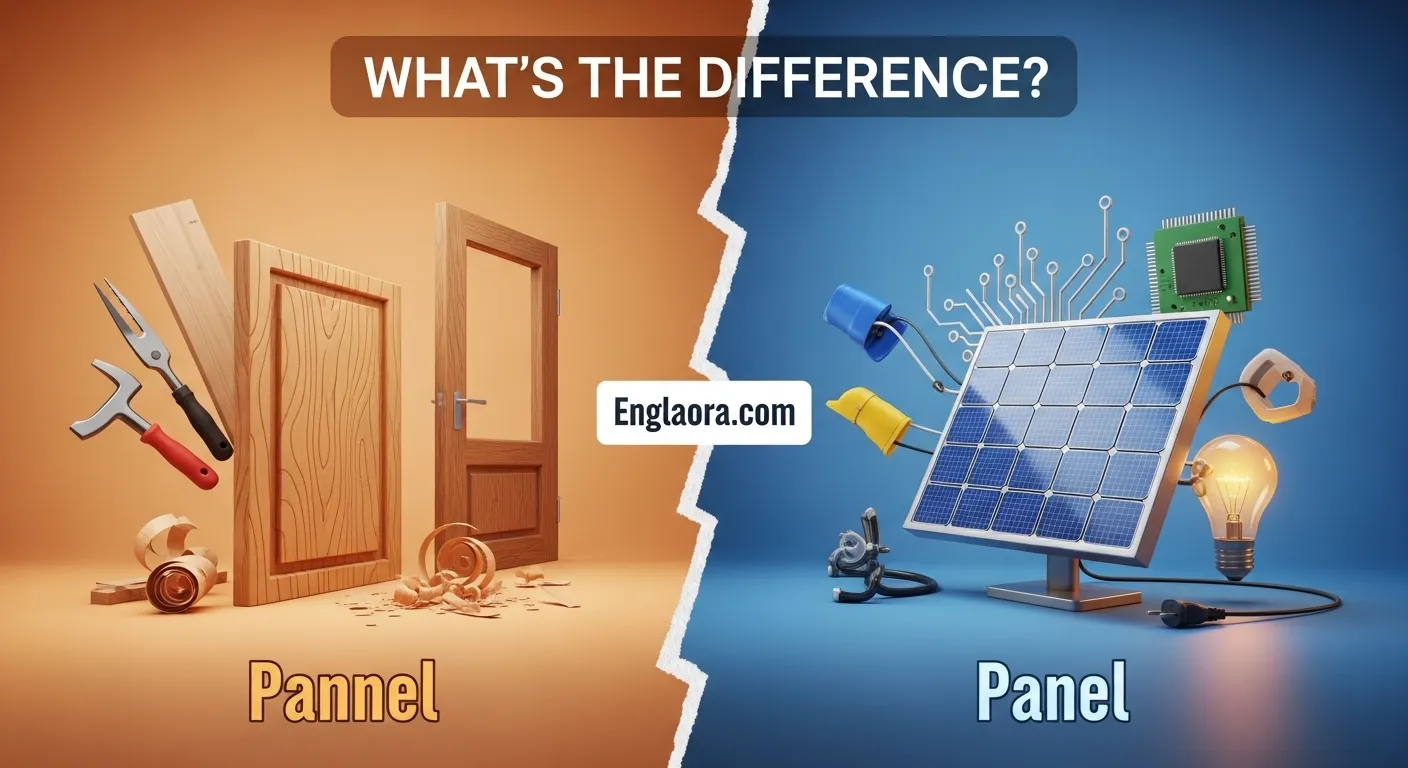
Hey, I want to share something that happened to me recently involving Pannel or Panel.
I was chatting with a friend when this word suddenly popped up, and honestly, I wasn’t sure which spelling was correct.For a moment, I kept thinking, “Am I missing something here?” It felt confusing, and I didn’t want to reply the wrong way or sound careless.
So, I decided to look into Pannel or Panel to understand the correct spelling and proper usage. Once I figured it out, everything became clear, and I realized how important it is to know these small differences to avoid awkward mistakes in conversations.
Now, whenever I see Pannel or Panel in chats, emails, or social media, I feel confident using the right one.
Pannel or Panel – Quick Answer
Panel is the correct spelling in modern English.
- ✅ Correct: panel discussion, control panel, solar panel
- ❌ Incorrect: pannel (in most modern contexts)
The word pannel is considered an outdated or incorrect variant today. Always use panel in professional, academic, and online writing.
The Origin of Pannel or Panel
The word comes from the Old French “panel”, meaning a piece of cloth or a small section. It entered English through Middle English and was used to describe a flat piece of wood or material.
In older English texts, pannel appeared as a variant spelling. Over time, English spelling became more standardized. Panel survived, while pannel faded out. That’s why you may still see pannel in very old books or historical records, but not in modern usage.
British English vs American English Spelling
Unlike many spelling differences (like colour vs color), both British and American English use “panel.” There is no regional difference here.
Spelling Comparison Table
| Variant | British English | American English | Status |
| panel | ✅ Correct | ✅ Correct | Standard |
| pannel | ❌ Incorrect | ❌ Incorrect | Outdated |
Which Spelling Should You Use?
- US audience: Use panel
- UK or Commonwealth audience: Use panel
- Global or SEO content: Use panel
There is no situation in modern English where pannel is the better choice.
Common Mistakes with Pannel or Panel
Here are frequent errors people make:
- ❌ Writing pannel discussion → ✅ panel discussion
- ❌ Using pannel in exams or blogs → ✅ panel
- ❌ Thinking British English prefers pannel → ❌ Not true
Tip: If you add a second “n,” it’s wrong.
Pannel or Panel in Everyday Examples
Emails:
- “Please review the control panel settings.”
News:
- “The expert panel shared its findings.”
Social Media:
- “Just installed new solar panels today!”
Formal Writing:
- “The review panel approved the proposal.”
Pannel or Panel – Google Trends & Usage Data
Search behavior shows that “panel” is widely used across the US, UK, Canada, and Australia. The term “pannel” appears mainly in spelling-check searches, meaning users are unsure or correcting mistakes.
This tells us one thing: people search “pannel or panel” to confirm the correct spelling, not to use both.
Keyword Variations Comparison Table
| Term Searched | Correct? | Recommended Use |
| panel | ✅ Yes | Always use |
| pannel | ❌ No | Avoid |
| pannel or panel | ❓ Question | Use to explain difference |
FAQs
1. Is “pannel” ever correct?
No. It is outdated and not used in modern English.
2. Do British people spell panel as pannel?
No. British English also uses panel.
3. Why do people still write pannel?
Because of old texts and spelling confusion.
4. Is pannel accepted in exams?
No. It will be marked wrong.
5. What about plural form?
The correct plural is panels.
6. Can pannel be used in legal writing?
No. Always use panel.
Conclusion
The confusion around pannel or panel is common, but the solution is simple. Panel is the only correct spelling in modern English. It works the same way in British English, American English, and global writing. The variant pannel belongs to history and should be avoided in professional, academic, and online content.
If your goal is clear communication, strong SEO, or error-free writing, stick with panel every time. if you’re writing an email, a blog post, a report, or social media content, using the correct spelling builds trust and credibility. When in doubt, remember this rule: one “n” is right, two “n’s” are wrong. With that, you’ll never second-guess this word again.

I’m Liam Prescott, writing for Englaora.com. I explain the nuances of commonly confused words, making complex topics simple and engaging for readers.