Hey, I want to share something that happened to me recently involving Yeah or Yea.
I was chatting with a friend when I suddenly saw one of these words pop up, and honestly, I froze for a second.
I wasn’t sure what it really meant or whether the other option would’ve been more appropriate.
Not wanting to reply the wrong way or make the conversation awkward, I decided to look into Yeah or Yea and understand their exact meanings and proper usage.
Once I figured it out, everything clicked.
I realized how small words like these can make a big difference in everyday conversations, especially in chats and on social media.
Now, whenever I see Yeah or Yea, I know exactly which one to use—and I respond with confidence instead of confusion.
Yeah or Yea – Quick Answer
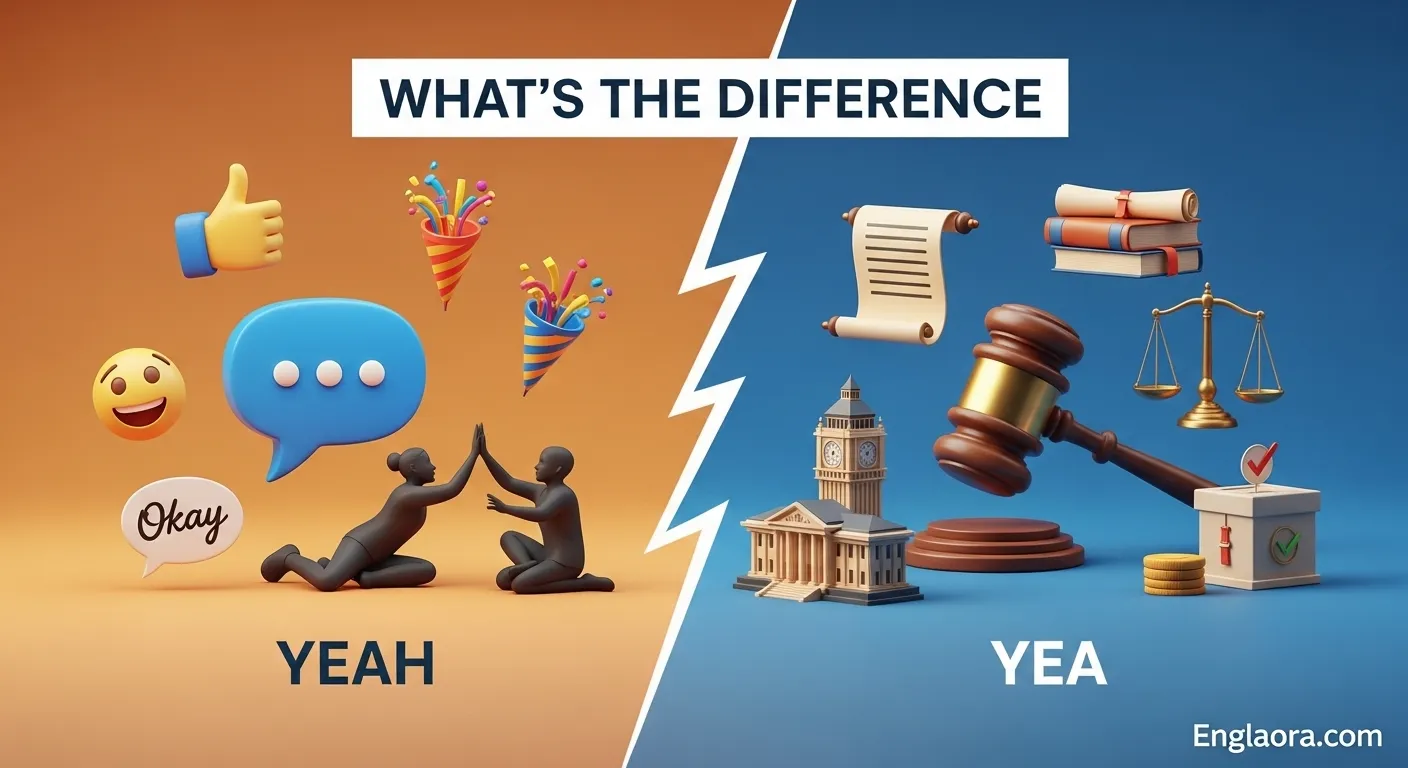
“Yeah” is informal and means yes in casual speech or writing.
“Yea” is formal and means yes, mainly used in votes, laws, or official records.
Examples:
- Yeah, I’ll join the meeting. ✅
- The motion passed with 20 yeas and 5 nays. ✅
Quick rule:
👉 Talking to people? Use yeah
👉 Voting or formal writing? Use yea
The Origin of Yeah or Yea
Yea is the older word. It comes from Old English “gēa”, meaning yes or indeed. For centuries, yea was the standard word for agreement, especially in formal speech and decision-making.
Yeah developed later as a spoken variation of “yes.” It became popular in casual conversation and everyday speech. Over time, people started writing it the same way they spoke it.
That’s why both words exist today:
- Yea = traditional, formal, historical
- Yeah = modern, casual, conversational
British English vs American English Spelling
Both British and American English use yeah and yea, but context matters more than location.
| Feature | British English | American English |
| Casual agreement | yeah | yeah |
| Formal voting | yea | yea |
| Daily conversation | yeah | yeah |
| Legal or official text | yea | yea |
Key point:
This is not a US vs UK spelling issue. It’s a formality issue.
Which Spelling Should You Use?
Use yeah if your audience is:
- General readers
- Social media users
- Friends or coworkers
- Blog or casual content readers
Use yea if your audience is:
- Government or legal readers
- Formal meetings
- Voting records
- Historical or religious texts
Global advice:
If you’re writing for an international audience, “yeah” is usually safer and clearer.
Common Mistakes with Yeah or Yea
❌ Yeah, the council voted 10 yeahs to 2 nays.
✅ Yea, the council voted 10 yeas to 2 nays.
❌ Yea, that movie was awesome!
✅ Yeah, that movie was awesome!
❌ Yeah or nay vote results
✅ Yea or nay vote results
Tip:
If you can replace the word with “sure”, use yeah.
If you can replace it with “approve”, use yea.
Yeah or Yea in Everyday Examples
Emails
- Yeah, I received the files.
- The board voted yea on the proposal.
News
- Lawmakers voted yea after debate.
Social Media
- Yeah, this post made my day!
Formal Writing
- All members responded with a yea.
Yeah or Yea – Google Trends & Usage Data
Search data shows “yeah” is far more popular worldwide because it’s used in daily speech, texting, and online content. “Yea” appears much less often and is mostly searched in legal, political, or academic contexts.
By context:
- Social media & chat: Yeah
- Laws & voting: Yea
- Blogs & casual writing: Yeah
- Official documents: Yea
Comparison Table: Yeah vs Yea
| Word | Meaning | Tone | Common Use |
| yeah | yes | Informal | Speech, text, blogs |
| yea | yes | Formal | Voting, law, records |
FAQs
1. Are yeah and yea interchangeable?
No. They are used in different contexts.
2. Is “yea” pronounced like “yeah”?
No. “Yea” is pronounced like “yay.”
3. Can I use yea in casual writing?
Not recommended. It sounds unnatural.
4. Is yeah acceptable in professional emails?
Only in semi-formal or friendly emails.
5. What does “yea or nay” mean?
It means yes or no in voting.
6. Is yea old-fashioned?
Yes, except in formal usage.
7. Which is better for SEO content?
“Yeah” is better unless discussing voting or law.
Conclusion
Understanding the difference between yeah or yea is simple once you focus on context and tone. Although both words mean yes, they are not interchangeable. Yeah is modern, friendly, and conversational. It fits perfectly in emails, blogs, texts, and everyday communication. Yea, on the other hand, is formal and traditional. It belongs in voting, legal records, official decisions, and historical writing.
This confusion exists because the words look similar and sound alike in casual speech. But using the wrong one can change the tone of your writing or make it seem unprofessional. When in doubt, ask yourself: Am I talking to people or recording a decision? That one question will guide you to the correct spelling every time.
Disciver More Article’s:
Continually vs Continuously: Usage, Meaning and Examples(2026)
Accept vs Except: Usage, Meaning and Examples(2026)
Resume vs Resumé: Meaning, Spelling and Usage(2026)

I’m Samantha Greene, working at Englaora.com to explain language differences and provide readers with easy-to-understand insights on commonly mistaken terms.