Have you ever typed “anyways” and wondered if it’s actually correct?
I faced the same confusion recently while chatting with a friend. For a second, I wasn’t sure which one to use.
So I looked it up properly. Now I know exactly when to use anyway and when anyways is okay.
This guide will help you use both words confidently — without sounding wrong in emails, chats, or formal writing.
Quick Answer
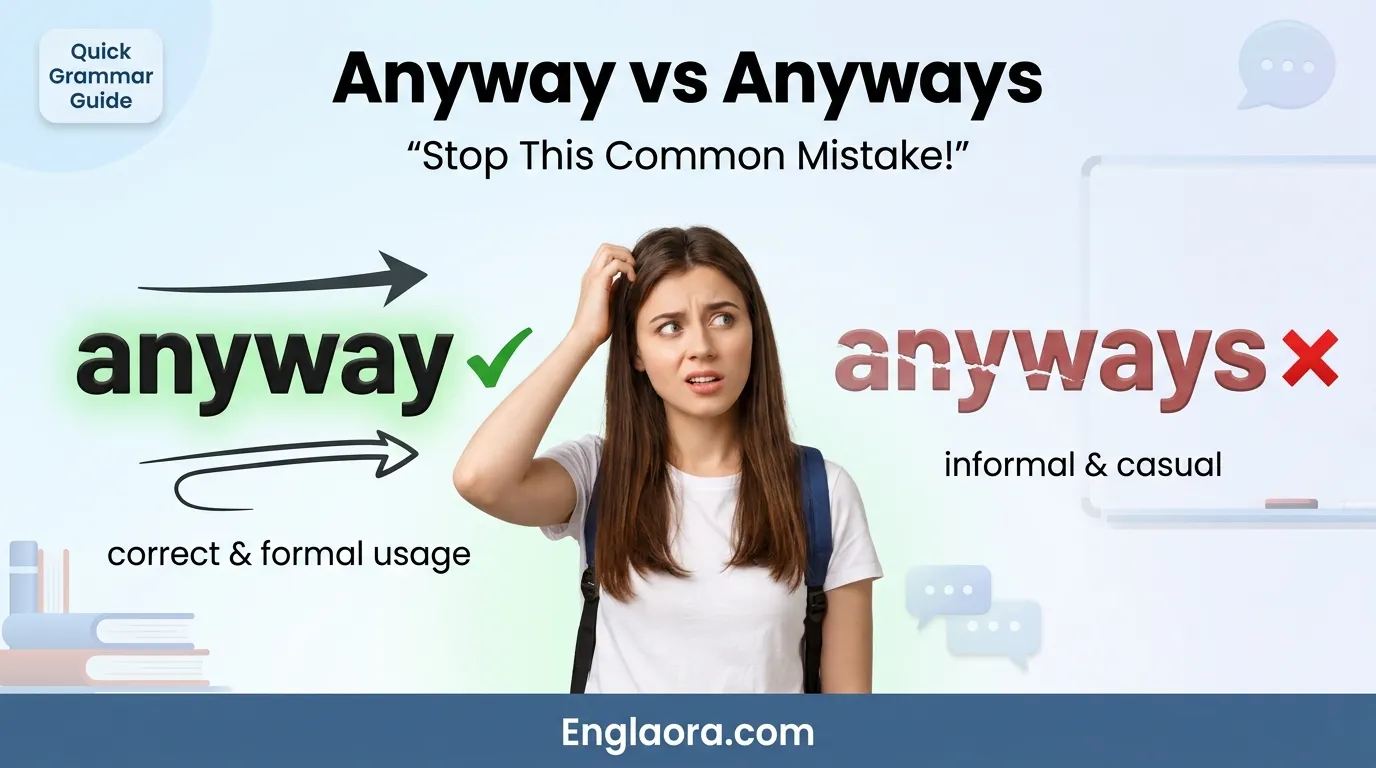
Use “anyway” in formal writing, emails, essays, and professional work.
“Anyways” is informal and common in casual speech (especially in American English).
Correct: “I was tired, but I went anyway.”
Casual: “I was tired, but I went anyways.”
Anyway Meaning
“Anyway” is an adverb. It shows contrast, returns to the main topic, or continues a conversation.
Examples:
- “I’m busy today, but I’ll come over anyway.”
- “It rained all day. Anyway, we still had fun.”
It is the standard and formal form in both British and American English.
Anyway vs Anyways Examples
- “I didn’t like the movie, but I went anyway.” ✅ (Correct)
- “It was raining, but I went anyways.” ⚠️ (Informal, okay in casual talk)
In professional writing and exams, always use anyway.
“Anyways” is fine in texts, social media, and friendly chats.
Any Way (Two Words)
“Any way” is completely different. It means “any method” or “any manner.”
Examples:
- “Is there any way to solve this problem?”
- “Can you help me in any way possible?”
Tip: If it’s about a method → use “any way” (two words).
If it’s for contrast or continuation → use “anyway” (one word).
Usage in Real Life
Emails & Professional Work:
“Thanks for your help. Anyway, let’s continue the project.”
Social Media & Reddit:
“Anyways, that’s just my opinion.” (Very common in casual posts)
Casual Speech:
“I don’t know what to say, but I’ll help you anyway.”
News & Formal Writing:
“Anyway, the plan is moving forward.”
Anyhow vs Anyway
- Anyway = neutral, works in most situations.
- Anyhow = more casual, similar to “in any case.”
Example:
“I missed the bus. Anyhow, I got a ride.” (Casual)
“I missed the bus. Anyway, I got a ride.” (Neutral)
Pronunciation Guide
- Anyway → /ˈɛn.i.weɪ/ → Sounds like EN-ee-way
- Anyways → /ˈɛn.i.weɪz/ → Sounds like EN-ee-ways
Tip: Both words are pronounced almost the same. The only difference is the soft “z” sound at the end of “anyways”. In fast speech, many native speakers use them interchangeably.
Synonyms
- anyhow
- regardless
- at any rate
- in any case
Use them according to the tone you want.
Comparison Table
| Word | Formality | Best For | Region Preference |
|---|---|---|---|
| anyway | Formal/Neutral | Writing, emails, exams | UK + US (Standard) |
| anyways | Informal | Casual chats, texts, social media | Mostly US & spoken |
| any way | Neutral | Meaning “any method” | Both |
Common Mistakes to Avoid
- Using “anyways” in academic essays or reports.
- Confusing “anyway” with “any way.”
- Putting “anyways” in formal emails.
Origin of Anyway
“Anyway” comes from Middle English “aniwei,” meaning “in any manner.”
“Anyways” appeared later as a spoken form, mainly in American English during the 19th century.
British vs American English
- Anyway → Preferred everywhere in writing (UK + US).
- Anyways → More common in casual American speech.
Tip: For global audiences or professional work, always use anyway.
Quiz
Choose the correct one:
- I didn’t like the book, but I read it __.
- She was late, but she joined us __.
- Is there __ to fix this problem?
Answers: 1. anyway | 2. anyway | 3. any way
FAQs
Q1: Can I use “anyways” in essays?
A: No. Use “anyway” in formal writing.
Q2: Is “anyway” American or British?
A: Both. It is the standard form worldwide.
Q3: When do I use “any way”?
A: When you mean “any method” — “Any way to fix this?”
Q4: Can “anyways” start a sentence?
A: Yes, but only in informal situations: “Anyways, let’s move on.”
Q5: Which is better for professional emails?
A: Always use “anyway.”
Conclusion
Understanding the difference between anyway and anyways is easy once you learn the basic rules. “Anyway” is the safe, standard, and professional choice for most situations. Use “anyways” only in relaxed, informal conversations or texting.
Always remember to separate “any way” (two words) when you’re talking about a method.
Mastering these small details will make your English sound more natural and confident — whether you’re writing an email, posting on social media, or speaking with friends. Start using “anyway” in formal situations today and you’ll notice the difference immediately!

I’m Liam Prescott, writing for Englaora.com. I explain the nuances of commonly confused words, making complex topics simple and engaging for readers.